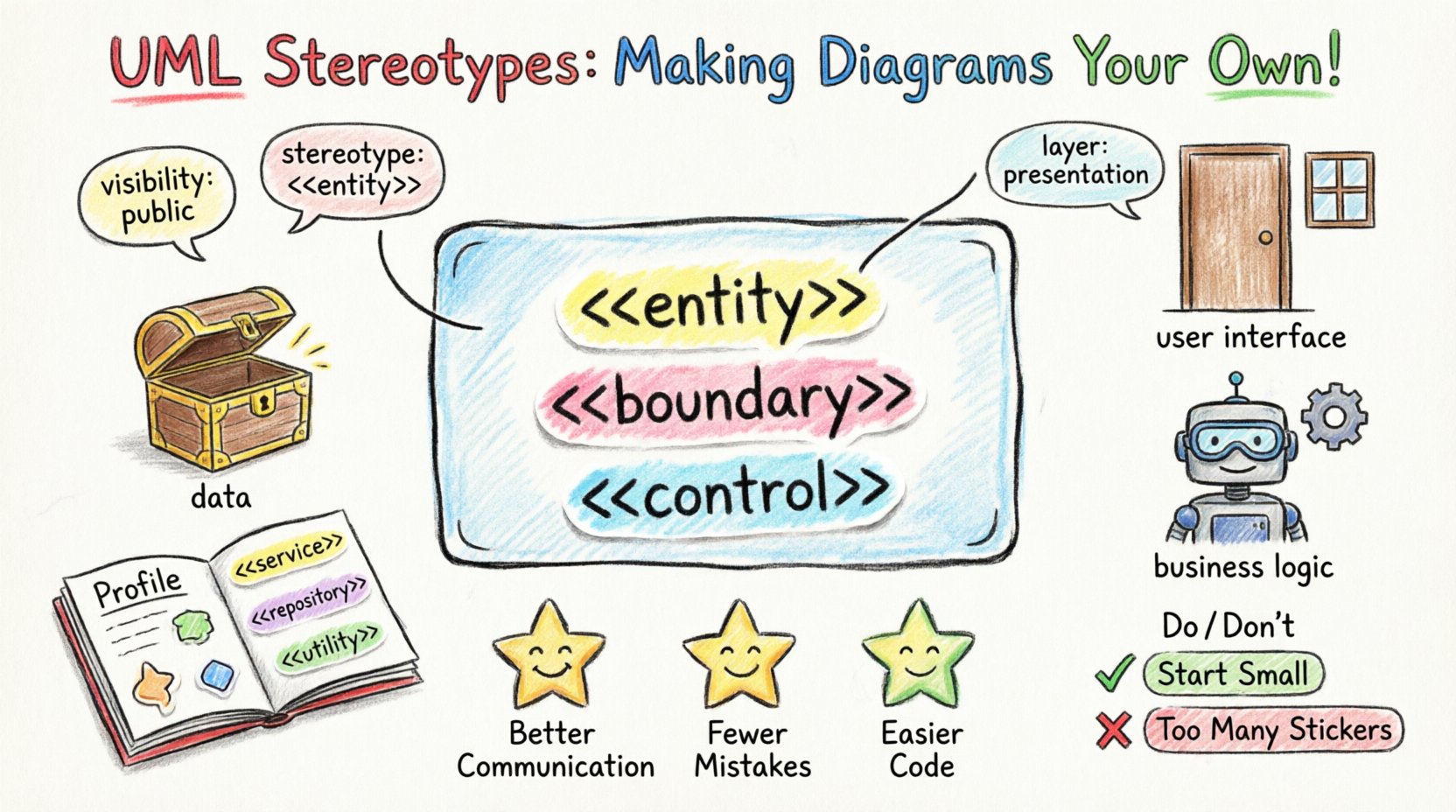
The Unified Modeling Language (UML) serves as a foundational standard for software architecture, providing a visual language for specifying, constructing, and documenting the artifacts of software systems. However, standard UML diagrams often fall short when addressing specific domain requirements. This is where UML stereotypes become essential. They allow architects and engineers to extend the standard metamodel without altering the core language itself. By introducing custom semantics, teams can create domain-specific models that communicate complex business logic more effectively than generic diagrams ever could. This guide explores the mechanics, benefits, and implementation strategies for utilizing UML stereotypes to tailor modeling efforts to unique project needs.