Bridging the Gap Between Ideas and Architecture
In the realm of software engineering, transitioning from a vague concept to a professional, technically sound architecture is often one of the most challenging phases of a project. The AI-Powered Use Case Modeling Studio addresses this challenge with a deliberate, tab-based interface designed to guide users through a structured, use-case-driven development workflow. By acting as a comprehensive guide, this studio eliminates the chaos of unstructured planning, ensuring that every project moves logically from high-level goals to granular technical details.
The Tab-Based Interface: A Sequential Progression
The core of the studio’s functionality lies in its interface, which follows a specific sequence of tabs. This design is not arbitrary; it dictates the flow of data to ensure consistency and completeness. The progression includes the following key components:

- Set Scope: This is the foundation of the project. Users define the system name, type, purpose, and target audience here. The output is a definitive Scope Statement and the identification of initial Actors and Candidate Use Cases.
- UC Description: Once the scope is set, the focus shifts to detailed textual specifications. This tab captures preconditions, postconditions, the Main Flow (happy path), and alternative or exception flows.
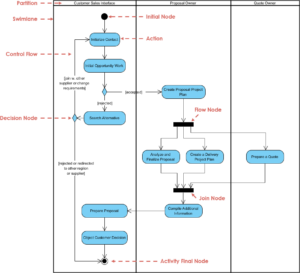
- UC Behavior View: Leveraging AI, this section derives dynamic models directly from the textual flows defined previously. It automatically generates Sequence Diagrams and Activity Diagrams to visualize behavior.
- UC MVC Layers: This tab bridges functional requirements with technical architecture by mapping use cases to the Model-View-Controller structure. It identifies necessary UI screens (Views), logic (Controllers), and data entities (Models).
- UC Static View: Here, the system generates structural Class Diagrams. These domain models are inferred from the nouns and responsibilities detected within the use case descriptions.
- UC Data View: Focusing on persistence, this tab produces data-centric visuals, such as Entity-Relationship Diagrams (ERDs), defining the physical database schema based on identified entities.
- Dashboard: A health-check center that provides a real-time overview of the project, tracking completeness percentages and test case coverage metrics.
- Report: The final step in the chain, enabling one-click generation of a comprehensive Software Design Document (SDD) in PDF or Markdown format.
The Designed Development Workflow
The studio facilitates a workflow divided into logical phases, ensuring that users do not get lost in the details before the foundation is laid.
Phase 1: Problem Definition & Scoping
The process begins by tackling the “blank page” problem. By moving from a vague idea to a structured scope statement, this phase establishes a single source of truth that guides all subsequent development.
Phase 2: Generating & Detailing Use Cases
In this phase, the AI takes the lead in identifying interactions and drafting full descriptions. This automation creates a robust starting point, allowing developers to refine logic rather than writing boilerplate text from scratch.
Phase 3: Automated Visual Modeling
Perhaps the most powerful phase, the studio converts textual flows into visual blueprints instantly. By handling both the logic and the layout of UML diagrams, it ensures that visual models perfectly match the written requirements.
Phase 4: Review, Reporting, & Export
Finally, the design is validated via the dashboard to ensure health and coverage. It is then compiled into stakeholder-ready documentation, ready for export and distribution.
The Logic Behind the Structure
The architecture of the Use Case Modeling Studio is rooted in established software engineering principles, ensuring that the output is not just generated, but technically valid.
Use-Case-Driven Priority
The methodology prioritizes behavioral requirements—the “what”—over structural design. Structural models like Class Diagrams and ERDs are treated as artifacts derived from the use case text, ensuring they are always justified by user needs.
The Traceability Chain
The sequential tabs create a clear traceability chain. There is a direct path from high-level user requirements to behavioral steps, then to candidate classes, and finally to persistent data structures. This ensures that every database table and class exists for a specific reason traceable to a user goal.
Consistency and Synchronization
A built-in Consistency Engine ensures that changes propagate automatically. If a use case is renamed or modified in one tab, that change is reflected across all other tabs and artifacts, eradicating “document drift” and keeping the documentation synchronized.
Architectural Mapping (MVC)
By mapping use cases to MVC layers, the studio bridges the gap between functional needs and technical implementation. This provides a clear roadmap for developers, translating abstract requirements into concrete coding tasks.
Conclusion: The Bilingual Project Mediator
To understand the true value of the AI-Powered Use Case Modeling Studio, one can think of it as a bilingual project mediator. Business stakeholders typically speak the “language of goals,” while developers speak the “language of blueprints.” This studio acts as a real-time translator between the two. It does not merely repeat words; it simultaneously draws the maps, floor plans, and instruction manuals required to build the system. By generating diagrams, specifications, and test plans in unison, it ensures that all parties involved are building the exact same house.