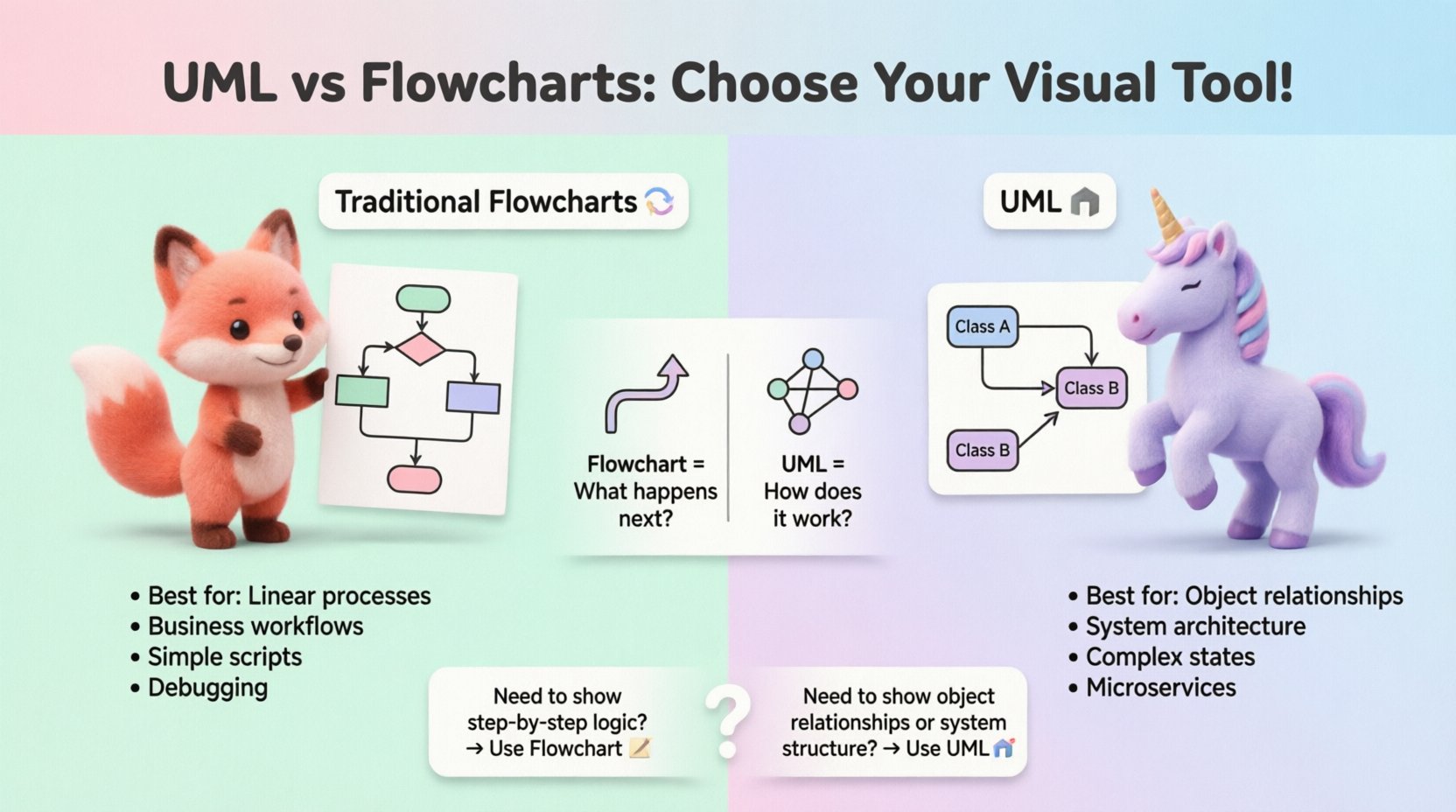
Designing complex systems requires clear communication. Developers, stakeholders, and architects must share a common understanding of how a system works before writing a single line of code. Two dominant visual languages exist for this purpose: Unified Modeling Language (UML) and …
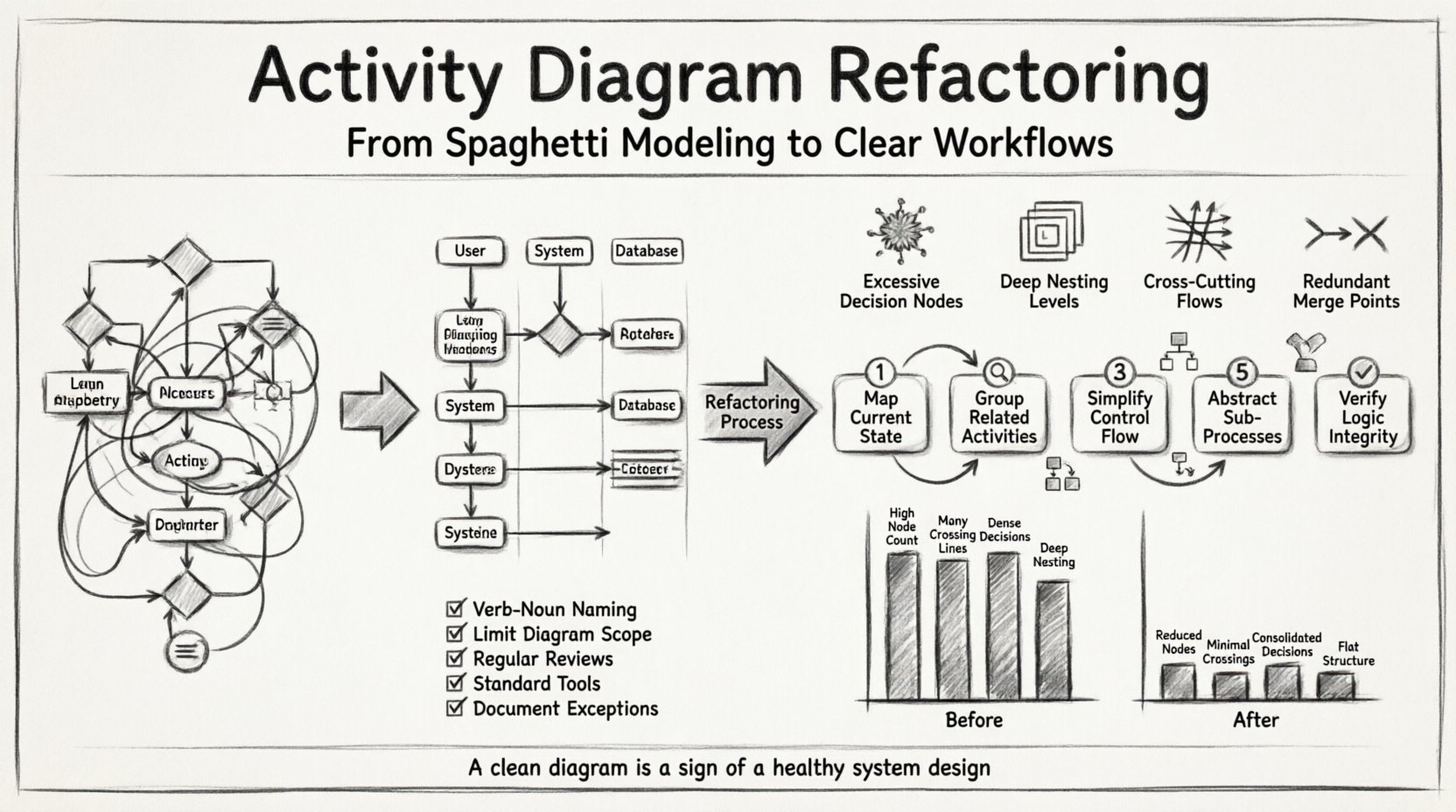
When technical documentation grows organically without strict governance, visual representations often suffer the same fate as source code. Activity diagrams, intended to clarify workflows and logic, can quickly devolve into tangled webs of lines and nodes. This phenomenon, often called …
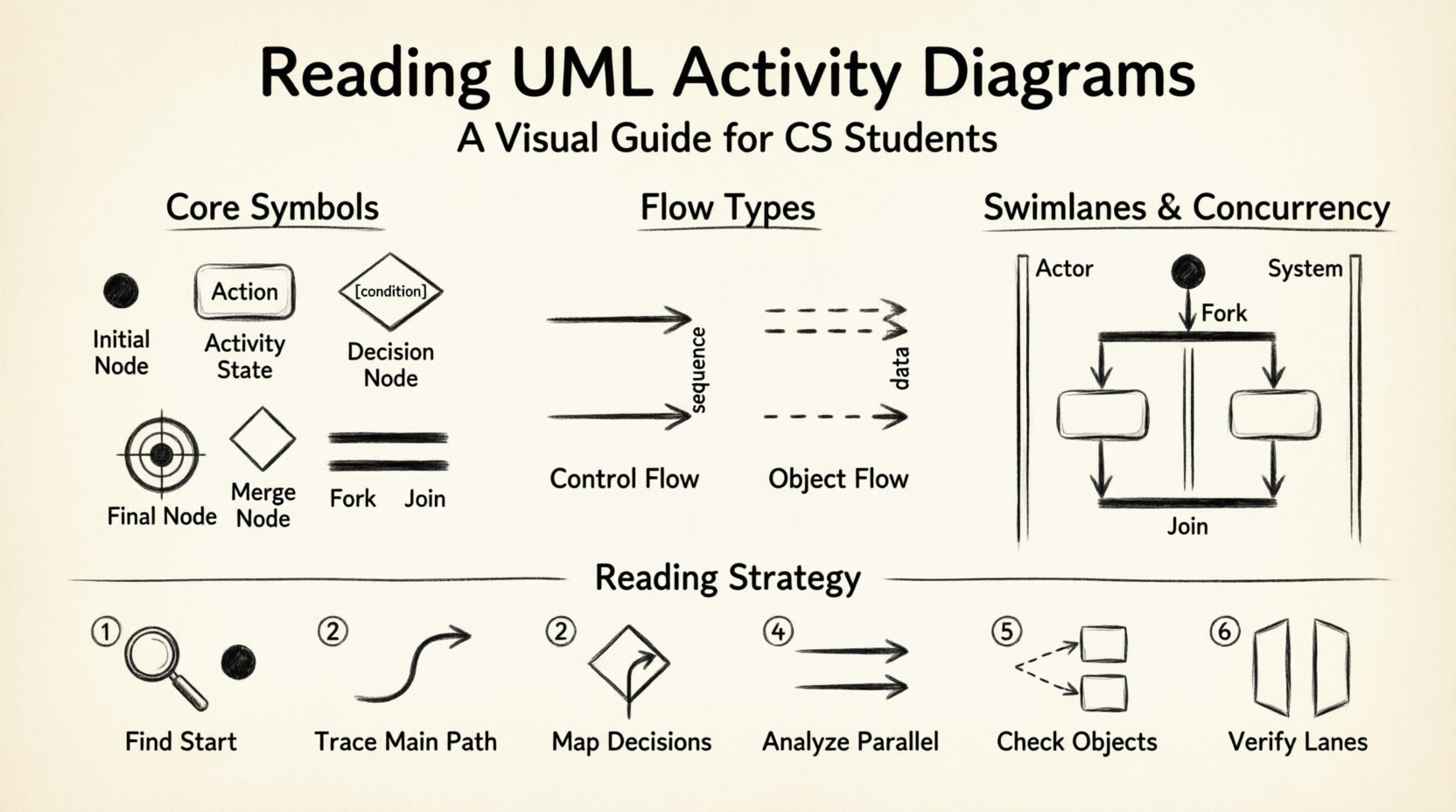
Understanding the dynamic behavior of a system is a fundamental skill for any computer science student. While use case diagrams provide a high-level view of interactions, activity diagrams dive deeper into the logic and flow of operations. These diagrams are …
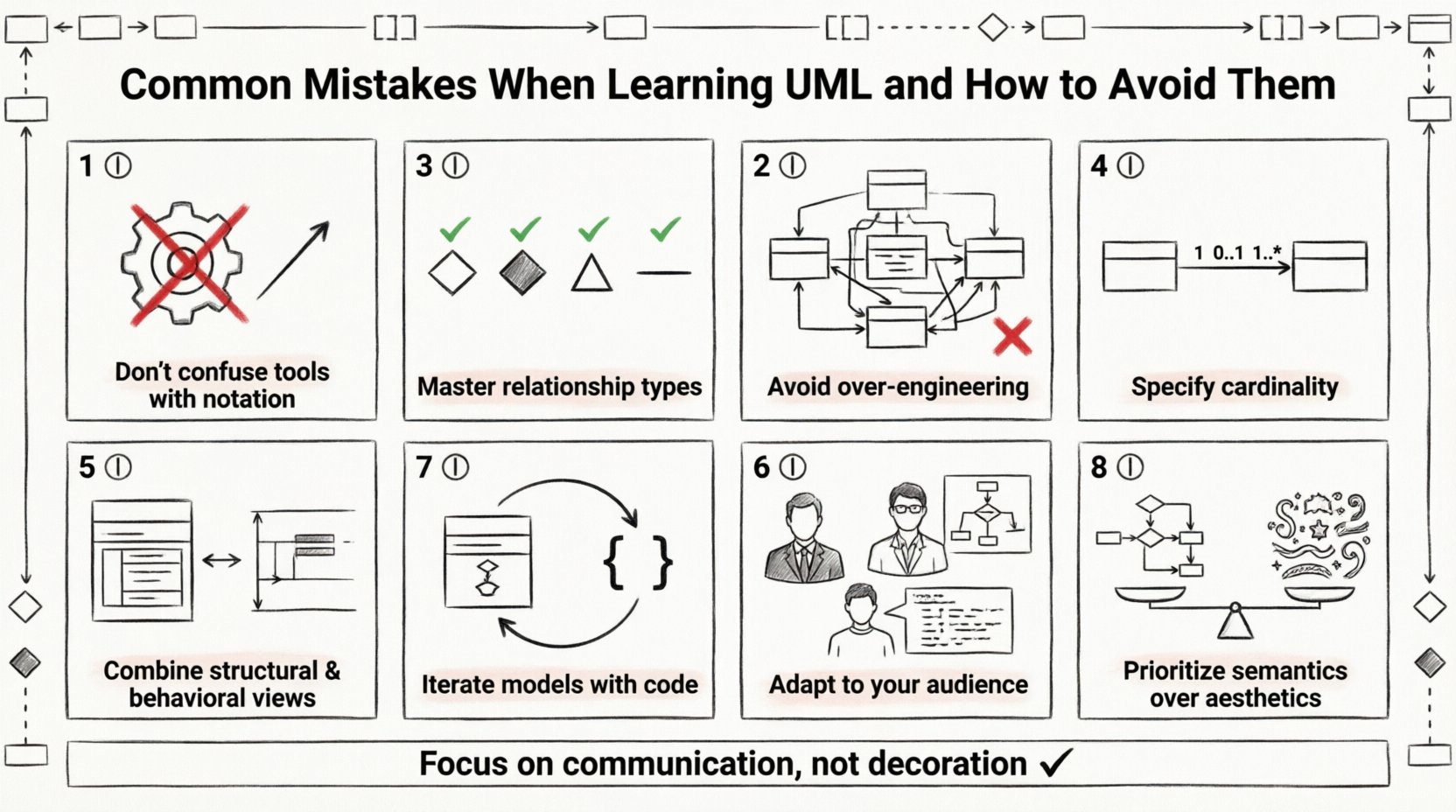
Unified Modeling Language, often abbreviated as UML, serves as the standard blueprint for software development. It provides a visual language to describe, specify, construct, and document the artifacts of a software system. However, the gap between understanding the syntax and …
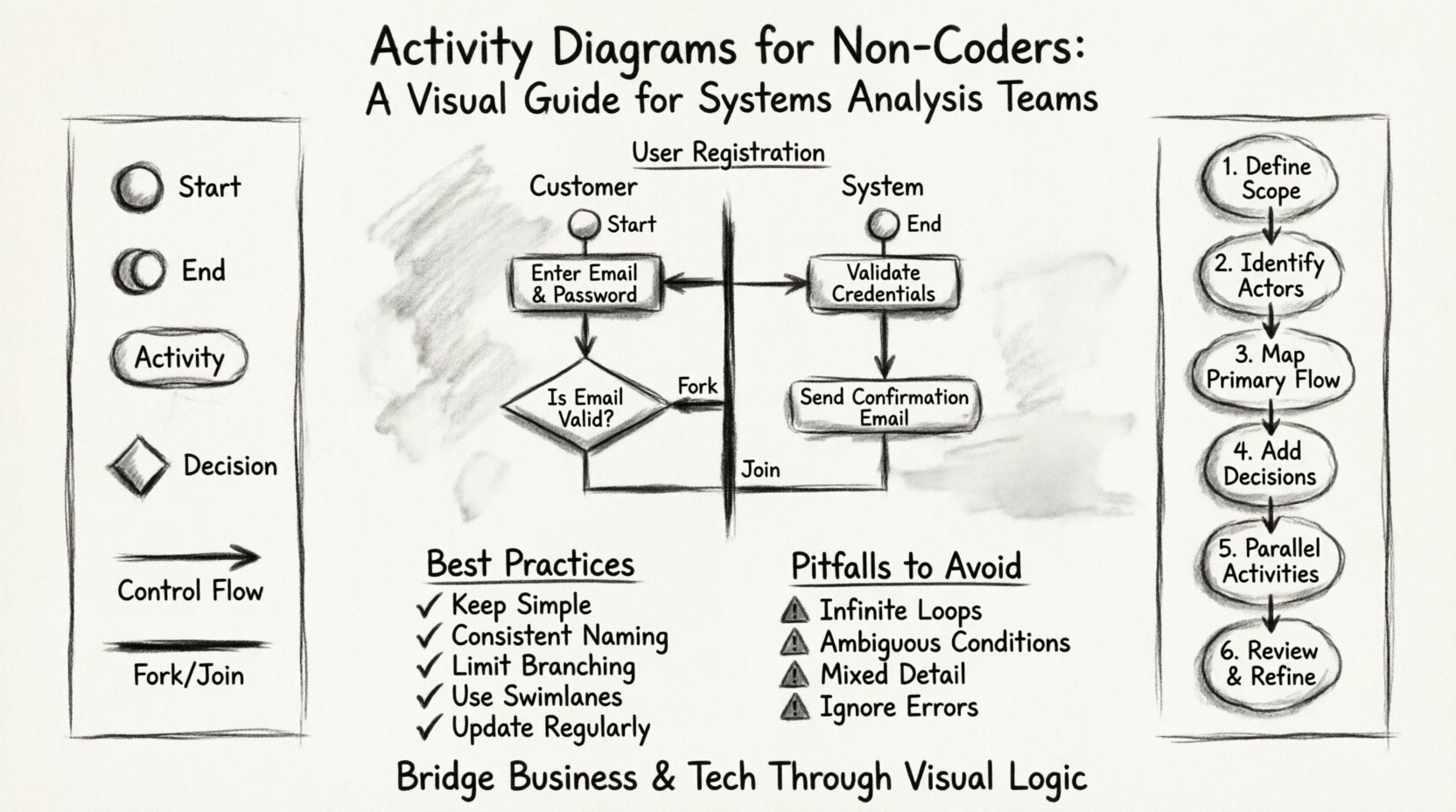
In systems analysis, bridging the gap between business requirements and technical implementation is a critical challenge. Often, this gap exists because the language of the business differs significantly from the language of development. Business stakeholders speak in processes, goals, and …
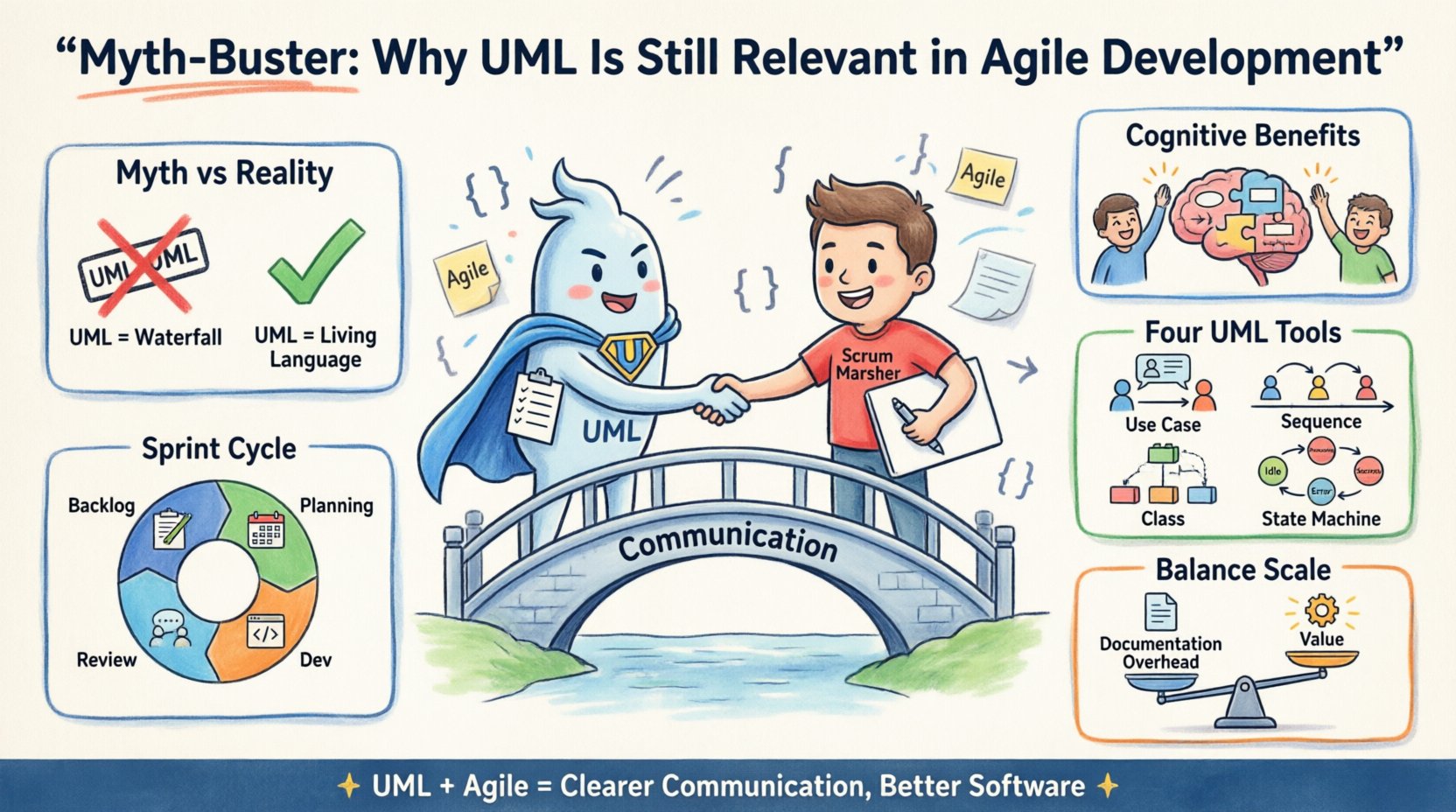
For years, a persistent narrative has circulated through software engineering circles. It suggests that Unified Modeling Language (UML) belongs to the past, a relic of heavyweight Waterfall methodologies that have no place in modern, iterative Agile environments. This belief often …
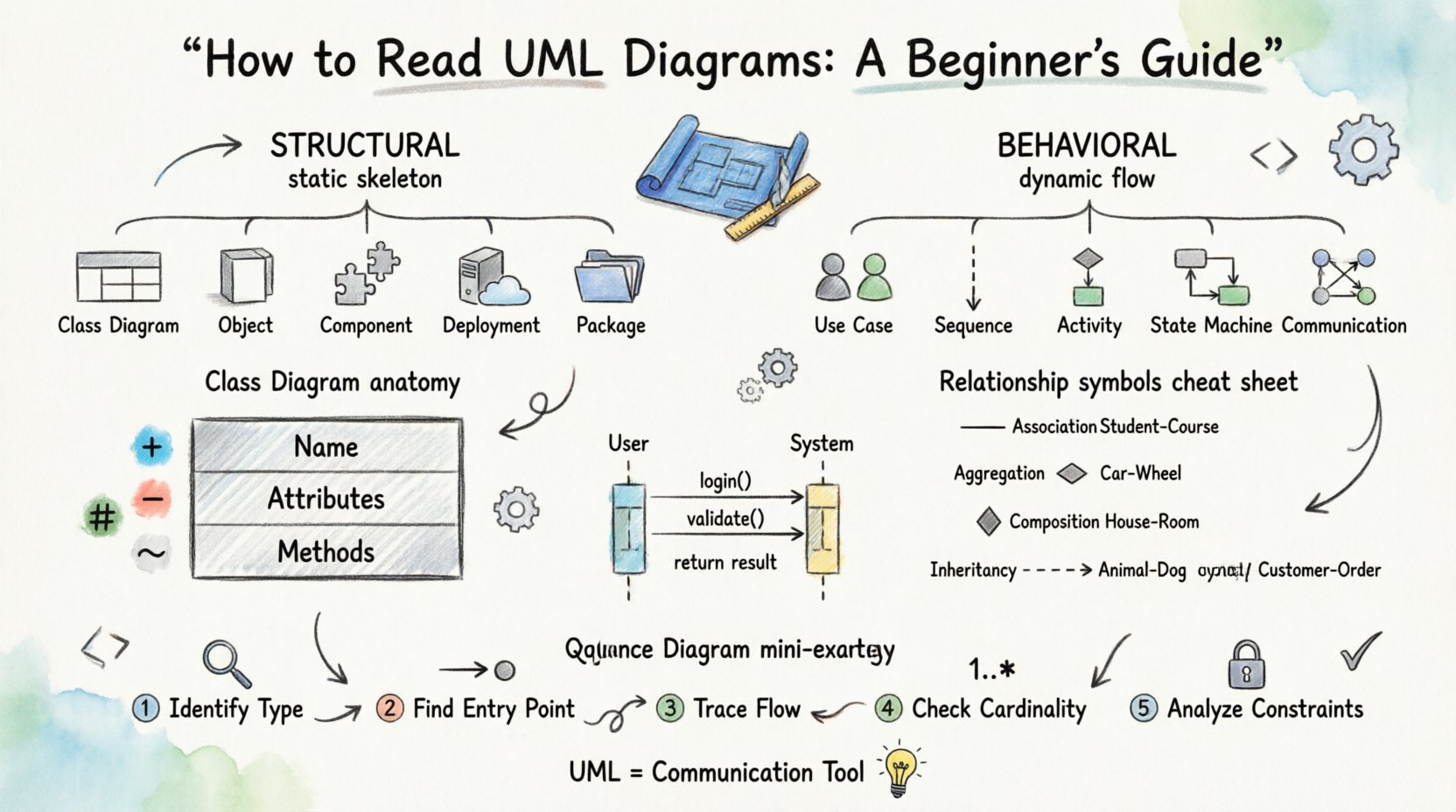
Entering the world of software development often means navigating a sea of technical documentation. Among the most common visual languages you will encounter is the Unified Modeling Language, commonly known as UML. For a junior developer, understanding these diagrams is …
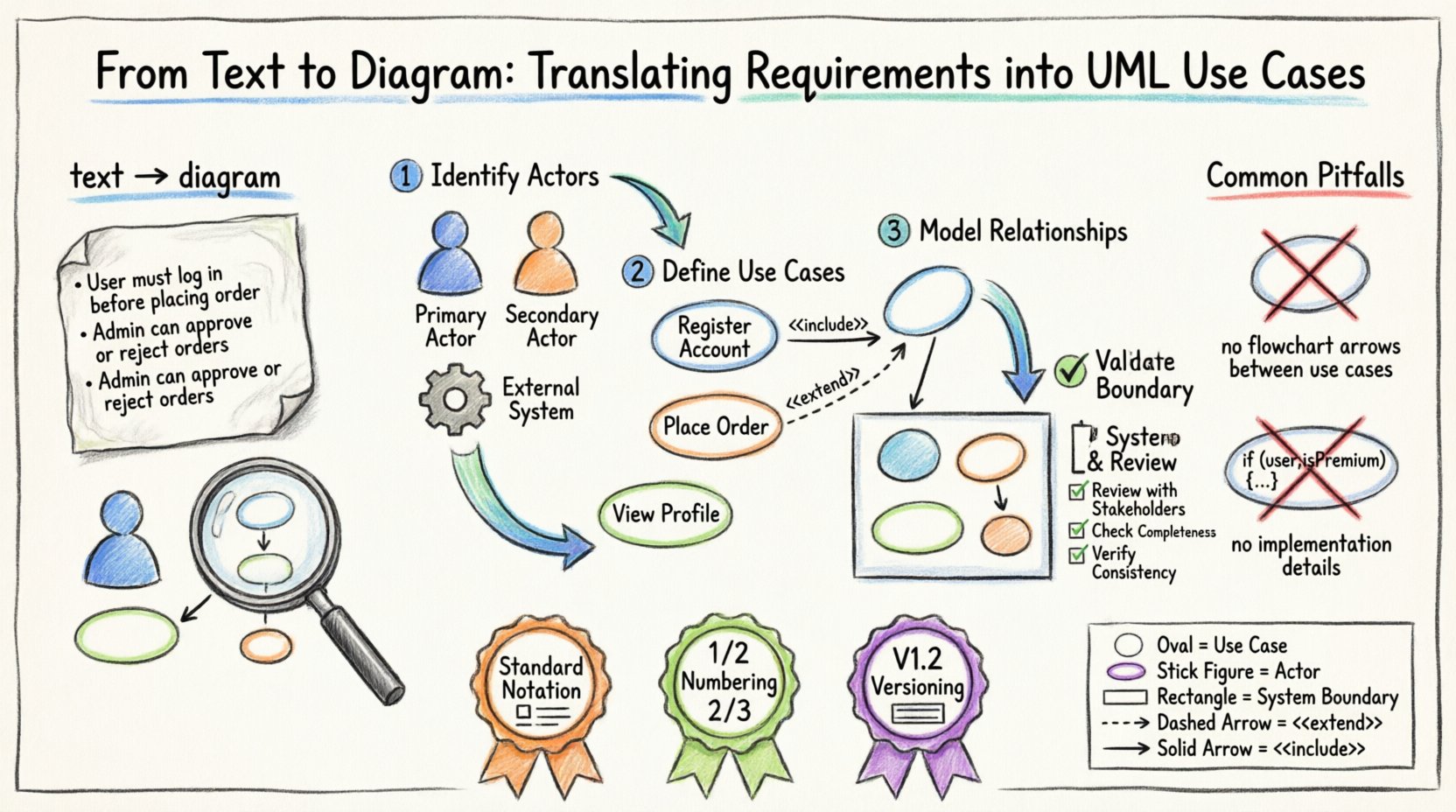
Software development relies heavily on clear communication. When stakeholders provide text-based requirements, ambiguity often creeps in. A sentence written by a product manager might be interpreted differently by a developer or a tester. This is where Unified Modeling Language (UML) …
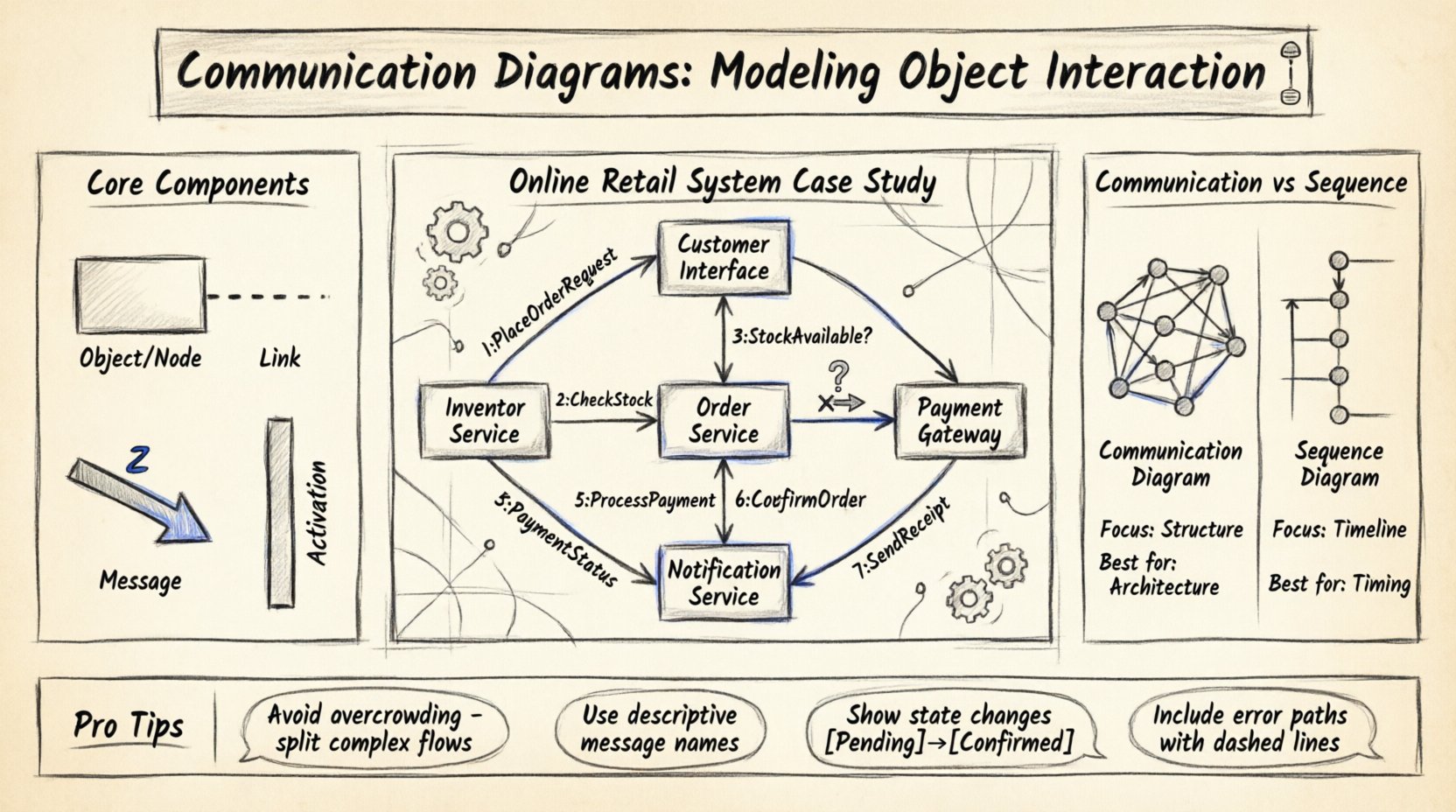
In the landscape of software architecture, visualizing how components talk to one another is critical for maintaining system integrity. While sequence diagrams often take the spotlight, Communication Diagrams offer a distinct perspective focused on the structural relationships between objects. This …
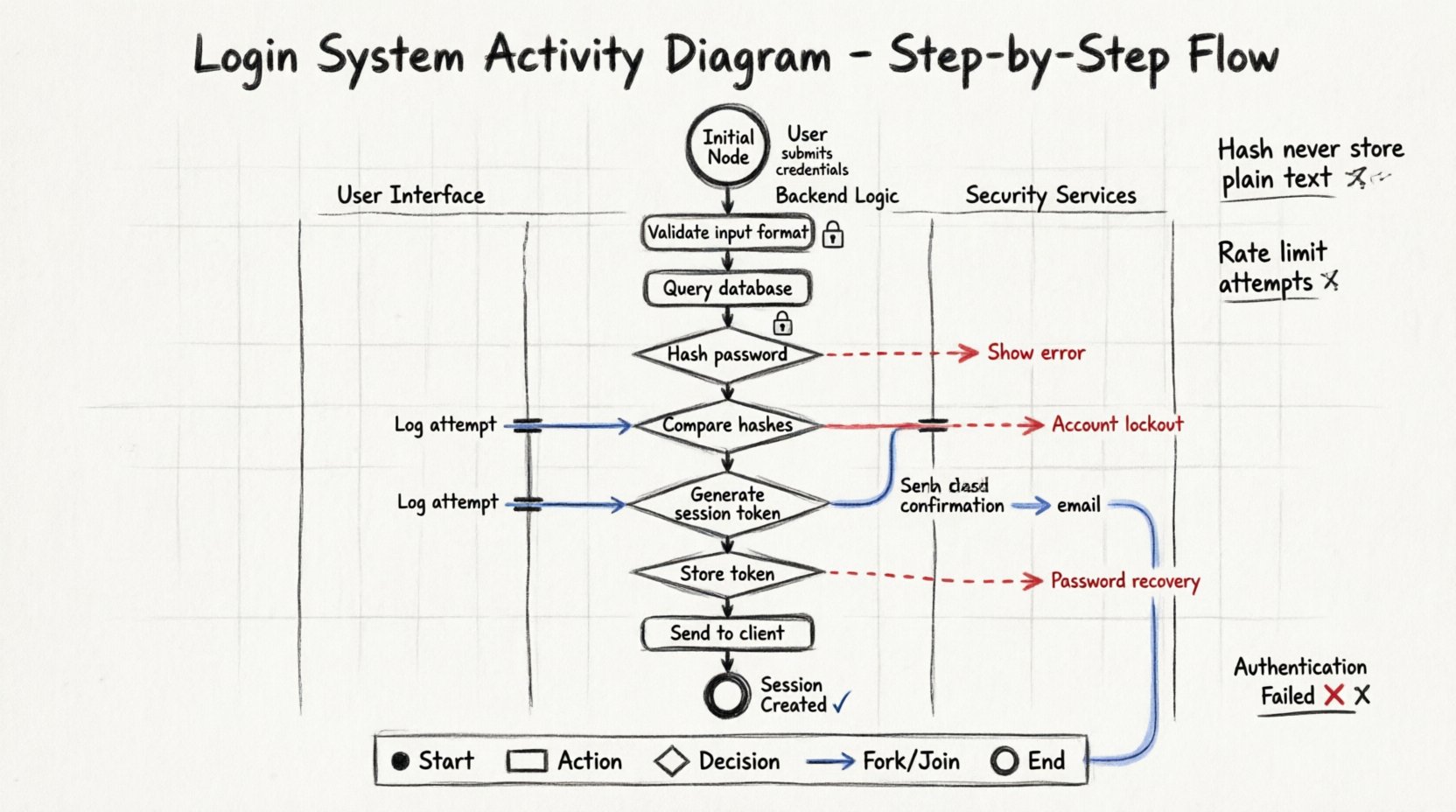
Designing secure and efficient authentication flows requires more than just writing code. It demands a clear visual representation of logic, decision points, and user interactions. An Activity Diagram serves as the blueprint for these processes, translating abstract requirements into a …