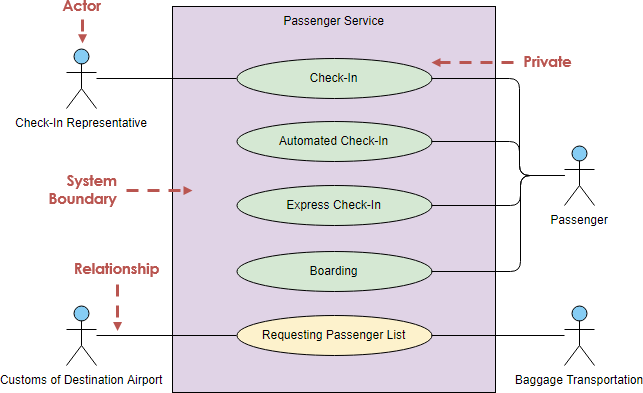
As systems grow in complexity, managing the multitude of use cases and actors becomes increasingly challenging. UML (Unified Modeling Language) provides a powerful tool called “packages” to help organize and manage large systems effectively. Packages allow …
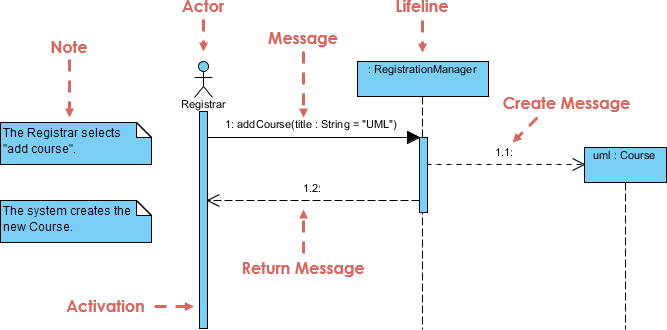
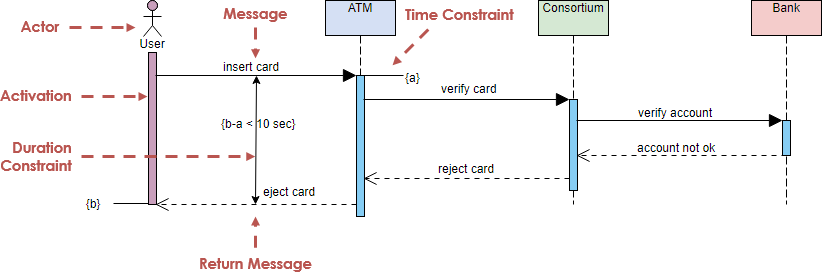
Sequence diagrams, commonly known as event diagrams, are powerful tools in the realm of system modeling. They visually represent the flow of messages between various components in a system, capturing scenarios that unfold dynamically during runtime. This article delves …
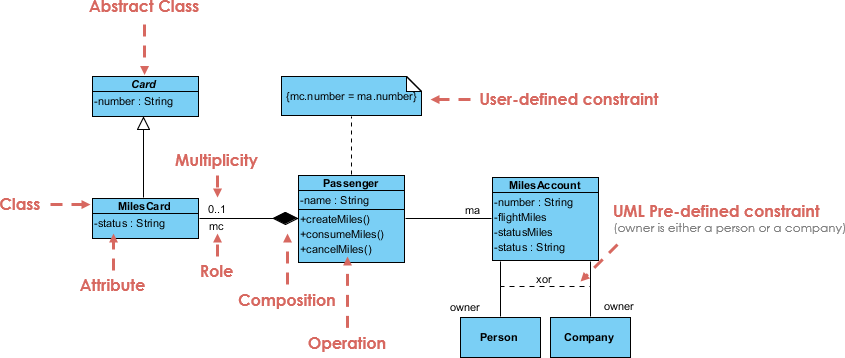
UML (Unified Modeling Language) class diagrams are a type of static structure diagram that illustrates the structure of a system by showing its classes, attributes, operations, and the relationships between objects. Class diagrams are essential for understanding the blueprint of …
UML (Unified Modeling Language) component diagrams are a type of structural diagram that illustrates the organization and dependencies among a set of components in a system. They help in understanding how components are wired together to form larger components or …
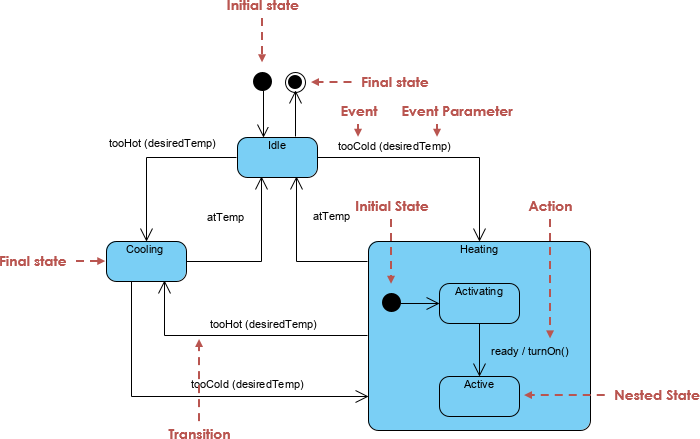
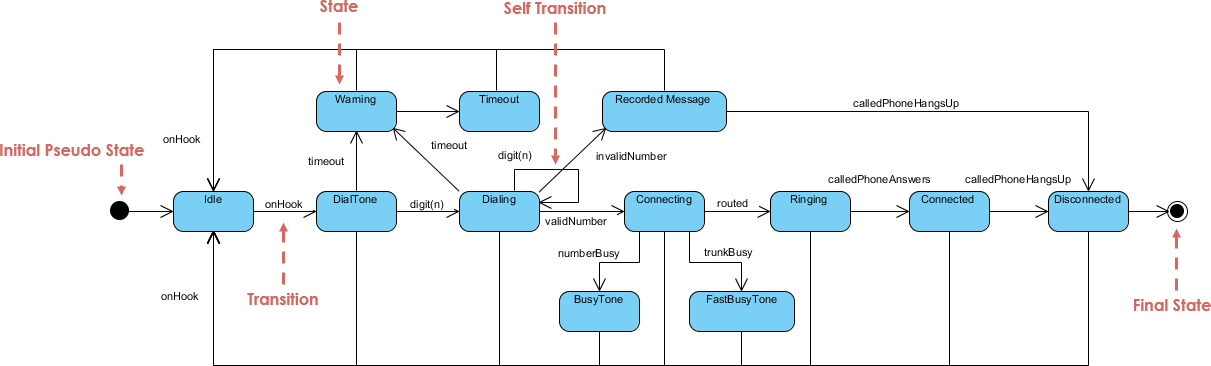
UML (Unified Modeling Language) state diagrams are essential tools for modeling the dynamic behavior of systems by illustrating the different states an object can be in and the transitions between those states in response to events. State diagrams…
UML (Unified Modeling Language) state diagrams, also known as state machines or state charts, are a type of behavioral diagram that illustrates the different states of an object and the transitions between those states in response to …
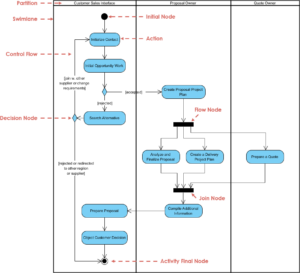
UML (Unified Modeling Language) activity diagrams are a type of behavioral diagram that illustrates the dynamic aspects of a system by modeling the workflow from one activity to another. They are particularly useful for understanding and designing the …
UML sequence diagrams are a powerful tool for visualizing the interactions between objects in a system over time. They help in understanding the sequence of messages exchanged between different components, making it easier to design and analyze complex systems. …
UML (Unified Modeling Language) sequence diagrams are a type of interaction diagram that illustrates how objects interact in a particular scenario of a use case. They capture the sequence of messages exchanged between objects over time, providing a …
Use case modeling is a critical technique in software engineering for capturing the functional requirements of a system. It helps in understanding the interactions between users (actors) and the system to achieve specific goals. The Unified Modeling Language (UML…