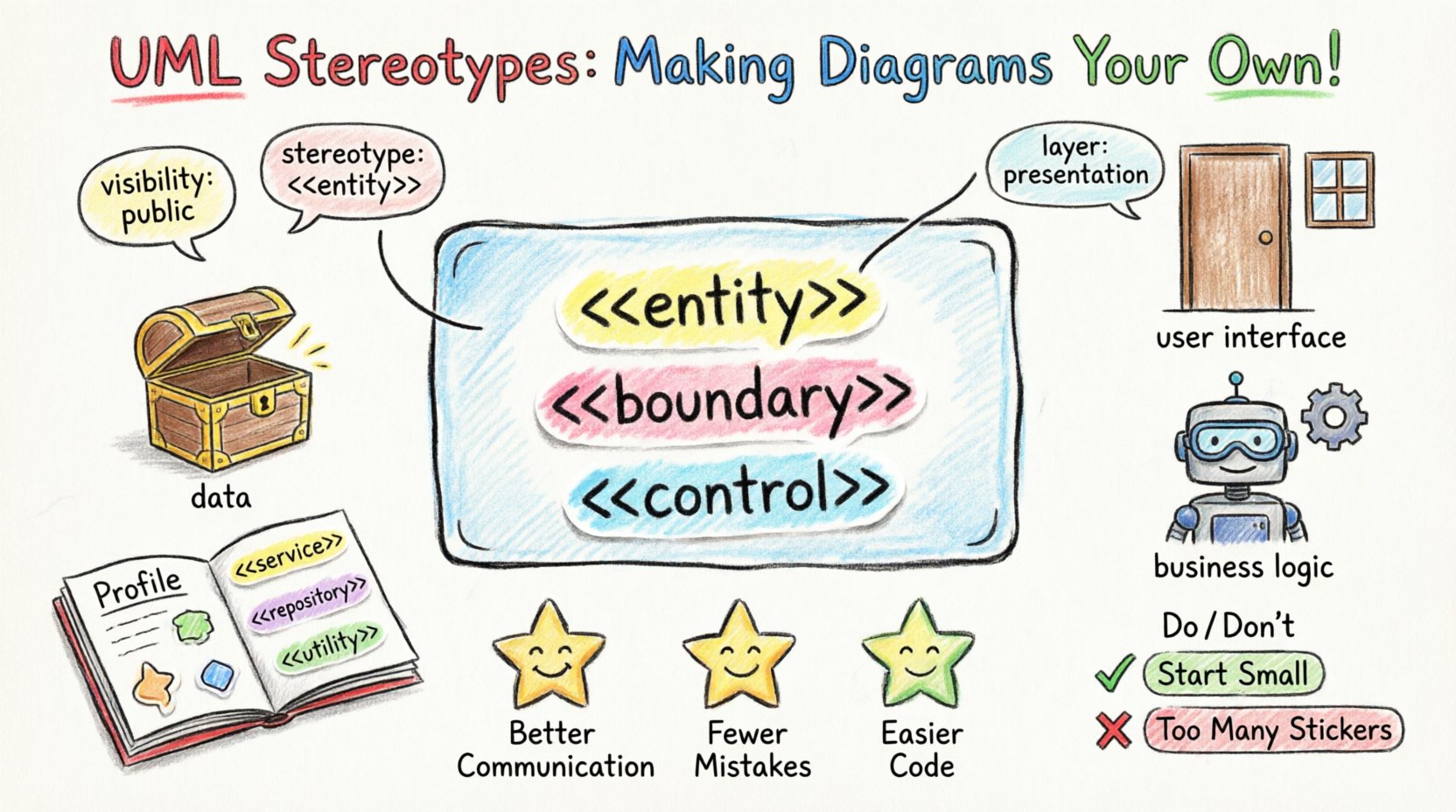
The Unified Modeling Language (UML) serves as a foundational standard for software architecture, providing a visual language for specifying, constructing, and documenting the artifacts of software systems. However, standard UML diagrams often fall short when addressing specific domain requirements. This is where UML stereotypes become essential. They allow architects and engineers to extend the standard metamodel without altering the core language itself. By introducing custom semantics, teams can create domain-specific models that communicate complex business logic more effectively than generic diagrams ever could. This guide explores the mechanics, benefits, and implementation strategies for utilizing UML stereotypes to tailor modeling efforts to unique project needs.

Read this post in:
Language
Aucune traduction disponible trouvéeCatégories
- Activity Diagram
- Agile
- AI
- AI Chatbot
- ArchiMate Diagram
- BPMN Tool
- C4 Model
- Class Diagram
- Communication Diagram
- Data Flow Diagram
- Deployment Diagram
- Free UML Tool
- Interaction Overview Diagram
- News
- Object Diagram
- Package Diagram
- Sequence Diagram
- Software Development
- State Diagram
- SysML tool
- Timing Diagram
- UML General
- UML Profile and Stereotype
- Uncategorized
- Use Case Diagram
- User Story
- Visual Paradigm UML Article List
Recent Posts
- Communication Diagrams Explained: A Beginner’s Step-by-Step Guide for Software Students
- 5 Essential Rules for Drawing Communication Diagrams in Academic Projects
- Tutorial: Visualizing Message Flow with Simple Communication Diagrams
- Q&A: Your Burning Questions About Communication Diagrams Answered Simply
- The Complete Communication Diagram Handbook for Undergraduate Engineers