
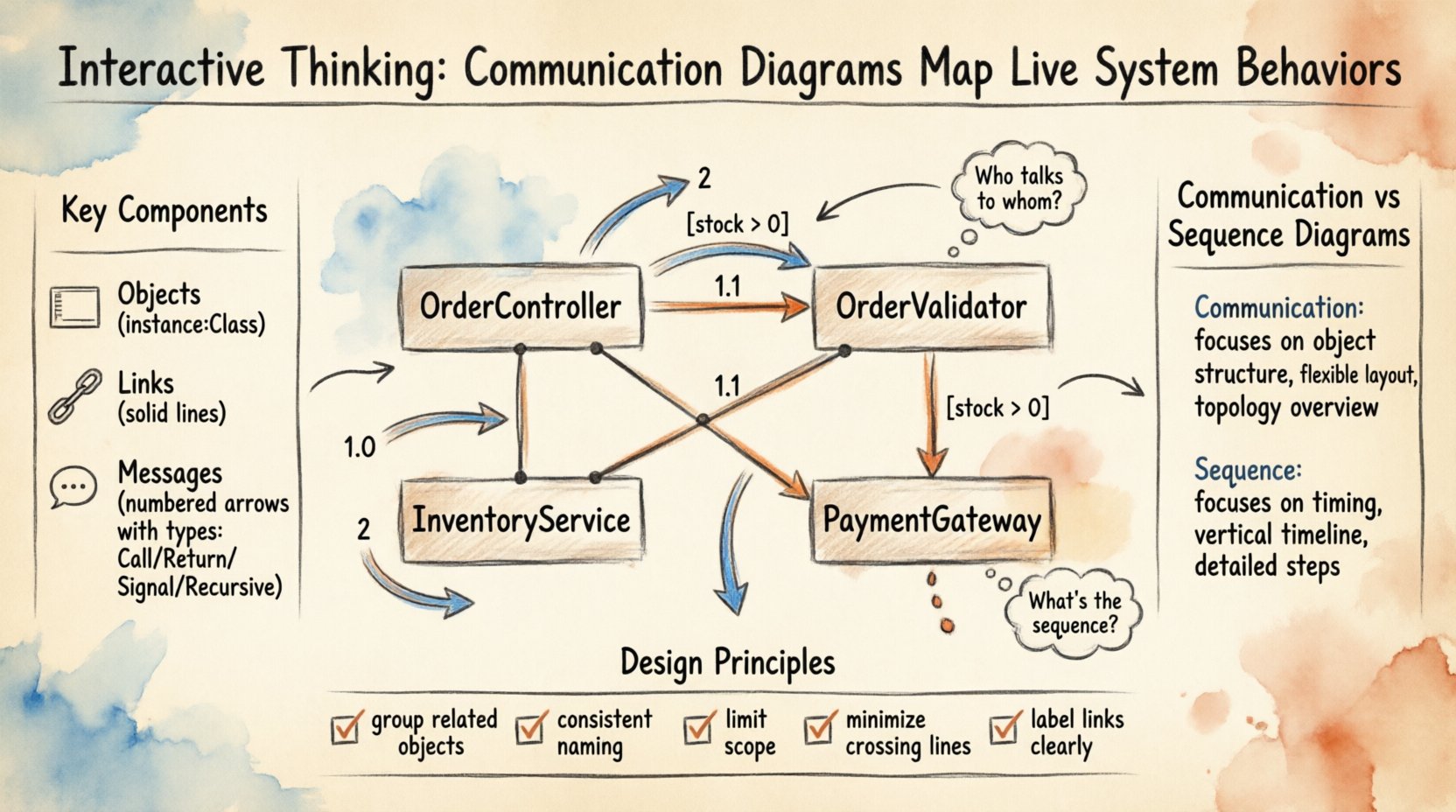
Building complex software is akin to orchestrating a symphony where every instrument plays at a specific moment, often reacting to the sound of others. To understand the music, one must see the score. In software architecture, communication diagrams serve as that score. They provide a visual representation of how objects interact to achieve a specific goal within a running system. Unlike static blueprints that show structure alone, these diagrams capture the dynamic flow of information. They map live behaviors, showing not just who talks to whom, but the sequence and context of those conversations.
This guide explores the mechanics of these diagrams. We will examine how they visualize dynamic behavior, the specific components that make them readable, and the cognitive strategies required to design them effectively. Whether you are modeling a new microservice or refactoring a legacy monolith, understanding this mapping technique is essential for clear system documentation.