
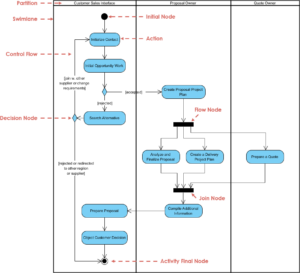
In the fast-paced ecosystem of software development, speed often dictates success. Agile methodologies prioritize working software over comprehensive documentation. Yet, complex systems require precision. This is where the UML State Diagram, often called a State Machine Diagram, finds its place. Historically associated with heavyweight processes, this modeling tool is evolving. It is shedding its legacy reputation to become a vital asset in modern, iterative development cycles. 🛠️
Understanding how behavioral modeling fits into sprint planning, continuous integration, and deployment pipelines is crucial for architects and developers alike. This guide explores the practical application of state machine diagrams within contemporary workflows, focusing on clarity, communication, and system stability without slowing down velocity.
What is a State Machine Diagram? ⚙️
A State Machine Diagram is a behavioral model that describes the discrete states of an object and the transitions between those states. Unlike a sequence diagram, which focuses on the order of messages over time, a state diagram focuses on the lifecycle of a single entity. It answers critical questions:
- What are the possible conditions? (e.g., Pending, Approved, Rejected)
- What triggers a change? (e.g., User Payment, System Timeout)
- What actions occur during the transition? (e.g., Send Email, Update Database)
- Are there constraints on moving to the next state? (Guards)
These diagrams are not just static pictures. They represent logic. In a microservices architecture, where services interact asynchronously, understanding the state of an order or a transaction is paramount to preventing data inconsistencies. 🧩
The Agile Tension: Speed vs. Structure ⚖️
Agile frameworks emphasize responsiveness to change. Some practitioners view detailed modeling as an obstacle. However, omitting behavioral modeling can lead to technical debt. When state logic is scattered across multiple code files or conditional statements, the system becomes brittle. A dedicated state diagram centralizes this logic.
Consider the following scenarios where state modeling integrates effectively:
- Complex Workflow Automation: When a user journey involves multiple approval steps, a state diagram clarifies the path before code is written.
- Event-Driven Architectures: In systems relying on message queues, knowing the valid states prevents consumers from processing invalid messages.
- Regulatory Compliance: Financial and healthcare systems often require audit trails. State diagrams document the logic required to meet these standards.
The goal is not to create documentation for documentation’s sake. The goal is to reduce ambiguity. When a team agrees on the states, the code becomes a direct translation of that agreement.
Integrating State Diagrams into Sprint Cycles 📅
How does this modeling fit into a two-week sprint? It does not require a separate phase. It evolves alongside the user stories.
1. Backlog Refinement
During story grooming, if a feature involves significant logic flow, a rough sketch of the states can be created. This helps identify edge cases early. For example, if a subscription service has a “Paused” state, the team must define what happens to billing during that pause.
2. Sprint Planning
Tasks are broken down based on state transitions. One developer might handle the transition from “Draft” to “Published,” while another handles the “Published” to “Archived” logic. This parallelizes work without creating conflicts.
3. Development & Pairing
Developers refer to the diagram as a source of truth. Instead of guessing what a button click should do, they look at the transition guard. This reduces the need for constant clarification during the coding session.
4. Testing & QA
Test cases can be derived directly from the diagram. Every edge and every state is a test scenario. This ensures comprehensive coverage. If the diagram has a state with no outgoing transition, it is a design flaw known as a dead end, which QA can catch immediately.
5. Retrospective
If bugs related to state logic occur, the diagram is reviewed. Was the state defined incorrectly? Was a transition missing? The model serves as a reference for improvement in the next cycle.
Benefits and Challenges Table 📊
To visualize the trade-offs, consider the following comparison between traditional documentation-heavy approaches and modern, integrated modeling.
| Aspect | Traditional Waterfall Approach | Modern Agile Integration |
|---|---|---|
| Timing | Created at the start of the project, often before coding begins. | Created just-in-time during sprint refinement or planning. |
| Ownership | Often owned by a dedicated architect or analyst. | Shared responsibility among the whole development team. |
| Updates | Prone to becoming outdated as requirements change. | Updated iteratively alongside code changes. |
| Focus | Compliance and sign-off. | Clarity and defect prevention. |
| Tooling | Static diagrams stored in repositories. | Executable or version-controlled models linked to CI/CD. |
The Role of Automation and Model-Driven Engineering 🤖
The future of state diagrams lies in automation. The industry is moving toward Model-Driven Engineering (MDE). In this paradigm, the state diagram is not just a drawing; it is executable.
- Code Generation: Frameworks can generate boilerplate code from the diagram. This ensures the implementation matches the design exactly.
- Simulation: Before deployment, the model can be simulated to check for unreachable states or infinite loops.
- Validation: Automated tests can verify that the running application adheres to the state model defined in the repository.
This reduces the gap between design and implementation. It minimizes the risk of human error during the translation of logic into syntax. When the logic changes, the model updates, and the code regenerates. This is particularly useful for complex business rules that are prone to regression.
State Machines in Microservices and Distributed Systems 🌐
As systems become distributed, state management becomes harder. The CAP theorem dictates trade-offs between consistency and availability. State machines help manage consistency within a bounded context.
In an Event-Driven Architecture (EDA), services communicate via events. A state machine ensures that a service only reacts to events when it is in the correct state. For instance, a payment service should not process a “Refund” event if the order is in a “Cancelled” state. The state diagram defines these guards explicitly.
Key considerations for distributed state management include:
- Idempotency: Ensuring that repeated events do not cause state changes multiple times.
- Eventual Consistency: Understanding that state updates may take time to propagate across services.
- Saga Patterns: Managing long-running transactions where multiple services must coordinate state changes.
A state diagram visualizes these complex interactions. It acts as a contract between services. If the diagram is clear, the API contracts are clearer.
Common Pitfalls to Avoid 🚫
Even with the best intentions, teams can misapply state diagrams. Here are common mistakes to watch out for.
- Over-Modeling: Not every feature needs a state diagram. Use them for complex logic, not simple CRUD operations.
- Creating Too Many States: A diagram with fifty states is hard to read. Consolidate similar states or split the diagram into sub-machines.
- Ignoring Error States: Always account for failure paths. What happens if the transition fails? Is there a “Error” state or a “Retry” state?
- Static vs. Dynamic: Ensure the diagram reflects the dynamic nature of the system. If the system changes frequently, the diagram must be lightweight enough to update quickly.
Future Trends: AI and Adaptive Design 🌱
Artificial Intelligence is beginning to influence system design. AI tools can analyze codebases and suggest state diagrams. They can identify state inconsistencies across different modules.
Furthermore, adaptive systems are emerging. These systems can adjust their behavior based on usage patterns. While this is advanced, the underlying logic still requires a defined state structure. The diagrams become the foundation for machine learning models that predict system behavior.
Best Practices for Team Adoption ✅
To successfully adopt this practice, teams should follow specific guidelines.
- Keep it Simple: Use standard symbols. Do not invent custom notations unless necessary.
- Version Control: Store diagrams in the same repository as the code. This ensures they evolve together.
- Review as Code: Treat the diagram as a code artifact. Require pull request reviews for diagram changes.
- Collaborative Creation: Use whiteboarding tools during meetings to build the model together. This ensures shared understanding.
- Focus on Transitions: Spend more time defining the triggers and actions than defining the states themselves. The transitions are where the business logic lives.
Conclusion on Modern Relevance 🔍
The relevance of UML State Diagrams has shifted. They are no longer just for initial design phases. They are living documents that support the entire lifecycle of a software product. By integrating them into Agile workflows, teams gain a powerful tool for communication and quality assurance. The complexity of modern software demands this level of structural clarity. When implemented correctly, state modeling does not slow down the team; it accelerates confidence.
As technology advances, the need for precise behavioral modeling will only grow. Whether dealing with IoT devices, financial ledgers, or customer portals, the state of the system is the truth. Ensuring that truth is documented and maintained is the mark of a mature engineering culture. Embrace the diagram. It is the map for the journey ahead.