
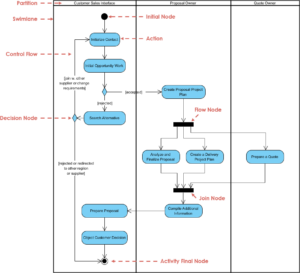
Designing complex systems requires more than just mapping out linear paths. Modern applications, embedded systems, and network protocols operate in environments where events arrive unpredictably. This is the domain of asynchronous behavior. To model this complexity effectively, engineers rely on UML State Machine Diagrams. These diagrams provide a visual language to describe how a system reacts to external stimuli over time.
When a system is asynchronous, the order of operations is not guaranteed. A button press might happen before a data packet arrives, or an interrupt might occur while a calculation is running. Standard flowcharts fail here because they assume a sequential, synchronous flow. State Machine Diagrams, however, are designed to handle events, triggers, and concurrency. This guide explores how to leverage these diagrams to visualize, document, and debug asynchronous interactions with precision and clarity.
🔍 The Foundation: Understanding State Machines
Before diving into the nuances of asynchrony, we must establish a solid understanding of the core components. A state machine defines the behavior of an object by specifying its states and the transitions between them.
- State: A condition or situation during the life of an object during which it satisfies some condition, performs some activity, or waits for some event.
- Transition: A relationship between two states that indicates that an object in the first state will move to the second state when a specified event occurs.
- Event: A significant occurrence that triggers a transition.
- Guard Condition: A Boolean expression that must evaluate to true for a transition to occur.
- Action: An operation performed during a transition or while in a state.
In a synchronous context, an action might immediately trigger the next step. In an asynchronous context, an action might fire an event into a queue, allowing the system to continue processing other tasks while waiting for a response.
⚡ Modeling Asynchronous Events
Asynchronous behavior implies that the system does not block execution while waiting for a result. Instead, it registers an interest in an event and continues its work. The State Machine Diagram captures this through specific modeling techniques.
1. Event Queuing and Buffers
One of the most critical aspects of async modeling is the implicit or explicit queue. When an event arrives while the system is busy, it must be stored. In a diagram, this is often represented by:
- Entry Actions: Operations performed when entering a state (e.g., initializing a queue).
- Internal Transitions: Events handled without leaving the current state. This is crucial for async systems that must acknowledge an event without changing their primary mode of operation.
For example, consider a server handling requests. If it receives a “NewRequest” event while processing a “CurrentTask”, it does not stop the task. Instead, it queues the request. The diagram should show an internal transition or a specific state for “Queueing”.
2. Non-Blocking Transitions
In synchronous models, a transition often implies a direct handoff. In asynchronous models, transitions can be triggered by background processes. When drawing these diagrams, distinguish between:
- Synchronous Calls: The system waits for the result before proceeding.
- Asynchronous Signals: The system sends a signal and moves on immediately.
Visual cues for async signals often involve dotted lines or specific labeling conventions in the event name (e.g., signal!() vs signal()), though standard UML relies on context to define this.
3. Timeout Handling
Asynchronous systems often rely on timers. If a response does not arrive within a certain timeframe, the system must handle a timeout. This is modeled using a special event type, often denoted as timeout().
- Entry Action: Start a timer.
- Transition: Triggered by
timeout()if the expected event has not arrived. - Exit Action: Stop the timer if the expected event arrives first.
🧩 Concurrency and Orthogonal Regions
True asynchrony often involves multiple threads of execution running simultaneously. A single linear state machine cannot represent this. UML allows for Orthogonal Regions, which are parts of a state that operate independently.
Fork and Join
To model the start and end of concurrent activities, we use Fork and Join nodes.
- Fork: A solid black circle that splits a transition into multiple outgoing paths. It signifies the start of parallel execution.
- Join: A solid black circle that merges multiple incoming paths. It signifies the synchronization point where all concurrent activities must complete.
For instance, in a login system, a user might need to verify their email and phone number. These can happen in parallel (orthogonal regions). The system waits (Join) until both are confirmed before granting access.
| Concept | Definition | Visual Symbol | Use Case |
|---|---|---|---|
| Fork | Splits one flow into multiple parallel flows. | ⚫ (Solid Circle) | Starting background tasks |
| Join | Merges multiple parallel flows into one. | ⚫ (Solid Circle) | Waiting for all tasks to finish |
| History State | Remembers the last active substate. | H (Circle with H) | Returning to previous context |
| Choice State | Branching logic based on conditions. | ◇ (Diamond) | Decision making without events |
🛑 Interrupts and Preemption
In high-priority asynchronous systems, a lower-priority task might be interrupted by a critical event. This is known as Preemption. State diagrams handle this using Interrupts.
- Entry Point: Where the interrupt occurs (e.g., inside a specific state).
- Exit Point: Where the system resumes (usually the state where it was interrupted).
- Priority: Interrupts are typically labeled with a priority level to resolve conflicts.
Imagine a medical monitoring device. It is processing routine vitals (State A). Suddenly, a critical alarm event occurs. The system must immediately switch to an “Alert” state (State B). Once the alarm is acknowledged, it returns to State A. The diagram must clearly show the interruption path and the return path.
🔙 History States: Preserving Context
One of the most powerful features for async modeling is the History State. When a composite state is exited and then re-entered, does the system start at the beginning, or does it resume where it left off?
- Shallow History: Returns to the last active top-level state within the composite state.
- Deep History: Returns to the last active substate, preserving the entire hierarchy.
This is vital for async workflows where a process might be paused (e.g., waiting for network I/O) and later resumed. Without a history state, the system might reset to the beginning, losing valuable context about where it was in the async sequence.
🛡️ Guard Conditions and Actions
Not all events lead to a transition. Guard Conditions act as filters. They ensure that a transition only happens if specific criteria are met.
- Format: Written in square brackets, e.g.,
[dataReceived == true]. - Timing: Evaluated when the event occurs.
- Effect: If false, the event is ignored (unless there is a default transition).
Actions are the work done during a transition. In async systems, actions can be:
- Immediate: Synchronous code execution.
- Deferred: Scheduling a task to run later.
- Signal: Sending an event to another component.
⚠️ Common Modeling Pitfalls
Even experienced engineers can make mistakes when visualizing async behavior. Avoid these common errors to ensure your diagrams remain accurate.
1. Assuming Sequential Flow
Do not draw lines that imply time passes linearly between every box. Asynchronous events can happen at any moment. Ensure transitions are triggered by events, not just time passing.
2. Ignoring the Initial State
Every state machine must have exactly one Initial State (solid black circle). Without it, the diagram is ambiguous regarding how the system starts. In async systems, the initial state often involves setting up the event listener or queue.
3. Overloading States
Do not pack too much logic into a single state. If a state has multiple unrelated responsibilities (e.g., “Waiting for Input” AND “Processing Data”), split it. This makes debugging easier.
4. Missing Error Paths
Async systems are prone to failures (timeouts, network loss). Ensure your diagram includes transitions for error events. A state machine that only shows the “Happy Path” is incomplete.
📋 Best Practices Checklist
Use this checklist to validate your UML State Machine Diagrams before implementation.
- ✅ Event Naming: Are event names consistent? Use verbs for actions (e.g.,
startRequest()) and nouns for signals (e.g.,paymentReceived). - ✅ Completeness: Does every state have a defined behavior for unexpected events? (Unhandled events should be ignored or logged).
- ✅ Concurrent Regions: Are orthogonal regions clearly separated with a dashed line?
- ✅ History States: Are history states used correctly to maintain context after interruptions?
- ✅ Transitions: Are transitions labeled with the Event, Guard, and Action (E/G/A) format?
- ✅ Final States: Is there a clear termination point? Use a double-circle symbol for the final state.
- ✅ Scalability: Can this diagram be extended without becoming a “spaghetti diagram”? Use nested states for complexity.
🔄 Comparison: Synchronous vs Asynchronous Modeling
To further clarify the differences, consider how the same scenario is modeled in both paradigms.
| Feature | Synchronous Model | Asynchronous Model |
|---|---|---|
| Execution Flow | Linear, step-by-step | Event-driven, non-blocking |
| Waiting | Block until response arrives | Continue processing other tasks |
| Concurrency | Difficult to represent | Supported via Orthogonal Regions |
| Timing | Implicit in flow order | Explicit via Timers/Timeouts |
| State Complexity | Lower (Flat) | Higher (Nested/Composite) |
🛠️ Practical Application Scenarios
Where is this knowledge applied in the real world? Understanding these diagrams helps in various domains.
1. IoT Devices
Internet of Things devices often operate on limited power and intermittent connectivity. They must handle sleep states, wake-up events, and data synchronization. State diagrams help manage the power cycles and connection retries.
2. Payment Gateways
Transactions involve multiple steps (Authorization, Capture, Refund). Network failures are common. Async state machines ensure that a transaction is not lost if a response is delayed, using timeouts and retry logic.
3. User Interface (UI) Logic
Modern web applications handle user clicks, network responses, and animations concurrently. A state diagram can model the UI lifecycle, ensuring buttons are disabled during loading and re-enabled when data returns.
4. Robotics and Control Systems
Robots must react to sensor data in real-time. They often have safety states that interrupt normal operation. Preemptive state transitions are critical here to prevent physical damage.
🧠 Advanced Techniques: Hierarchical States
As systems grow, a flat list of states becomes unmanageable. Composite States allow you to group related states together. This reduces visual clutter and clarifies the hierarchy.
- Nesting: Place a sub-state machine inside a parent state.
- Inheritance: Transitions defined in a parent state can apply to all child states unless overridden.
- Entry/Exit Points: Define specific points where the system enters or leaves the composite state.
When dealing with async behavior, composite states are useful for isolating specific async workflows. For example, a “NetworkCommunication” state could contain sub-states for “Connecting”, “Sending”, “Waiting”, and “Retrying”. This keeps the main system logic clean while detailing the complex async interaction.
📝 Summary of Key Concepts
Visualizing asynchronous behavior requires a shift in thinking from linear processes to event-driven reactions. UML State Machine Diagrams offer the necessary structure to represent this complexity.
- States represent the mode of operation.
- Transitions represent the reaction to events.
- Events are the triggers that drive the system forward.
- Concurrency is managed through orthogonal regions and fork/join nodes.
- History ensures context is preserved across interruptions.
- Timeouts handle the risk of waiting indefinitely.
By adhering to these modeling standards, teams can reduce ambiguity, improve code quality, and create systems that are robust against the unpredictability of asynchronous environments. The effort spent on creating a detailed diagram pays off during the debugging phase, as the visual representation often reveals logic gaps that code reviews might miss.
Remember, the goal is not just to draw a picture, but to create a precise specification of behavior that developers can implement with confidence. Whether you are designing a simple embedded controller or a distributed microservices architecture, the principles of state machine modeling remain constant. Focus on clarity, precision, and the handling of edge cases to build systems that stand the test of time.