
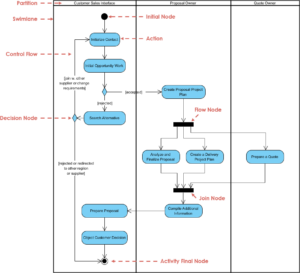
Understanding the dynamic behavior of a system is critical when designing complex software architectures. While class diagrams define structure and sequence diagrams define interaction flow, the UML State Diagram (or State Machine Diagram) focuses on the lifecycle of a single object. This diagram type reveals how an object responds to external stimuli throughout its existence.
State diagrams are essential for modeling reactive systems, where the system must react to events in real-time. Whether you are designing an embedded controller, a user interface workflow, or a network protocol handler, mastering the logic of state transitions ensures robust functionality. This guide breaks down the mechanics, notation, and application of these diagrams without relying on specific tools.
![Chalkboard-style educational infographic explaining UML State Diagrams for beginners: shows traffic light example, core elements (states, transitions, initial/final states), transition syntax 'event [guard] / action', entry/exit/do activities table, internal transitions, composite states concept, and best practices tips in hand-written chalk aesthetic on dark slate background](https://www.go-uml.com/wp-content/uploads/2026/04/uml-state-diagrams-beginners-guide-chalkboard-infographic.jpg)
🔍 What Is a State Machine Diagram?
A State Machine Diagram describes the behavior of a single object. It captures the various states the object can be in, the events that cause it to move from one state to another, and the actions it performs during these transitions.
Think of a traffic light system. It cycles through Green, Yellow, and Red. It does not move randomly; specific timers or sensors trigger the change. This cycle is the essence of a state machine. The object exists in a defined condition (state) until an event occurs, triggering a transition to a new condition.
Key Characteristics
- Reactive: The system waits for events rather than driving its own flow continuously.
- Finite: There is a limited number of states defined in the model.
- Sequential: Transitions happen in a specific order based on triggers.
- Event-Driven: External stimuli initiate changes in behavior.
This approach differs significantly from activity diagrams, which focus on the flow of control and data rather than the status of a specific object. State diagrams answer the question: “What can this object do, and what is it doing right now?”
🧱 Core Building Blocks
Constructing a state diagram requires understanding the fundamental elements. Each element serves a specific logical purpose in defining the system’s behavior.
1. States
A state represents a condition or situation during the life of an object where it satisfies some condition, performs some activity, or waits for some event. States are typically depicted as rounded rectangles.
- Simple State: An atomic state that cannot be subdivided further.
- Composite State: A state that contains other states within it (see Nested States section).
- Entry/Exit/Do: Internal activities associated with a state.
2. Transitions
Transitions are the arrows connecting states. They indicate how the object moves from one state to another. A transition is triggered by an event and may include a guard condition and an action.
The syntax for a transition label is often:
event [guard condition] / action
- Event: The trigger that initiates the transition (e.g., “click”, “timeout”, “error_received”).
- Guard Condition: A Boolean expression that must be true for the transition to occur. It is enclosed in square brackets [ ].
- Action: The activity performed when the transition fires.
3. Initial and Final States
Every state machine must have a starting point and an ending point.
- Initial State: Represented by a filled black circle. It marks the entry point of the diagram. Note: There is only one initial state per diagram.
- Final State: Represented by a filled black circle within a larger circle. It marks the termination of the object’s life cycle. There can be multiple final states.
🔄 Transition Logic and Events
The heart of a state diagram lies in how events are processed. Events are instantaneous occurrences that can be signals, calls, time events, or change events. When an event occurs, the state machine checks for a matching transition.
Triggering Mechanisms
Events can be internal or external. External events come from outside the object (like a user clicking a button). Internal events are generated within the object’s logic.
When an event arrives, the system checks the current state. If a transition exists for that event, the transition fires. If multiple transitions are possible, the guard condition determines which path is taken.
Handling Events Within States
Sometimes, an object needs to handle an event without leaving its current state. This is known as an internal transition.
- The state does not change.
- The object performs an action in response to the event.
- Entry and exit actions of the state are not triggered.
For example, a “Locked” door state might receive a “Key_Inserted” event. If the key is wrong, the door remains “Locked” but triggers an “Alarm” action. The state does not change, but the behavior reacts.
⚙️ Entry, Exit, and Do Activities
States often require setup and teardown actions. UML defines specific keywords to manage these behaviors.
Entry (/entry)
The entry action is executed immediately upon entering the state. This is the initialization phase. For a system moving from “Off” to “On”, the entry action might be “Initialize Hardware”.
Exit (/exit)
The exit action is executed immediately before leaving the state. This is the cleanup phase. Continuing the example, the exit action might be “Save Configuration”.
Do (/do)
The do action is executed while the object remains in the state. It implies continuous activity. For a “Processing” state, the do action might be “Calculate Results”. This activity runs until the state is exited or an event triggers a transition.
| Keyword | Timing | Example Use Case |
|---|---|---|
| Entry | When entering the state | Opening a file, allocating memory |
| Exit | When leaving the state | Closing a file, releasing memory |
| Do | While inside the state | Monitoring sensor data, rendering UI |
🏗️ Composite States and Hierarchies
As systems grow, flat state diagrams become unreadable. To manage complexity, UML allows for composite states. A composite state is a state that contains substates.
Nested States
When a state is composite, it acts as a container. The composite state has its own entry and exit points, but the internal substates can also have their own transitions. This creates a hierarchy.
- Orthogonal Regions: A composite state can contain multiple independent regions running concurrently. This is often represented by a dashed line separating the regions.
- Substate Transitions: Transitions can exist within the composite state or between the composite state and external states.
For instance, consider a “Video Player” state. Inside this, you might have substates for “Playing”, “Paused”, and “Stopped”. The transition from “Paused” to “Playing” stays within the “Video Player” composite state. However, a transition from “Playing” to “Error” might exit the composite state entirely.
🕰️ History States
When a system returns to a composite state after leaving it, how does it know where to resume? History states solve this problem.
Deep History State (H*)
The deep history state indicates that the system should return to the last active substate within the composite state. If the system was in “Playing” when it left the “Video Player” state, returning via the deep history state brings it back to “Playing”.
Shallow History State (H)
The shallow history state indicates that the system should return to the last active substate of the composite state, but not nested deeply. It essentially remembers the top-level substate active before the composite state was exited.
This distinction is crucial for systems that need to remember complex nested contexts. Without history states, the system might default to the initial substate every time, losing context.
🧩 Pseudostates
Pseudostates are special nodes that do not represent actual states but control flow within the diagram.
- Decision (Diamond): A diamond shape used to split the flow based on a condition. It looks like a choice point where only one path is taken.
- Fork (Bar): A thick black bar that splits a single transition into multiple concurrent transitions. All outgoing paths are triggered simultaneously.
- Join (Bar): A thick black bar that merges multiple concurrent transitions into one. It waits for all incoming paths to complete before proceeding.
These elements help manage complex logic without cluttering the diagram with nested states.
🆚 State Diagram vs. Activity Diagram
Confusion often arises between State Diagrams and Activity Diagrams. Both deal with flow, but their focus differs.
| Feature | State Diagram | Activity Diagram |
|---|---|---|
| Focus | Object behavior and lifecycle | Workflow and process flow |
| Trigger | Events and conditions | Control flow and data flow |
| Context | Reactive (waiting for input) | Proactive (driving process) |
| Duration | Can be indefinite (waiting) | Usually finite steps |
Use a State Diagram when you need to track the status of an object. Use an Activity Diagram when you need to map out a sequence of tasks to complete a goal.
📝 Modeling Best Practices
Creating clear and maintainable state diagrams requires adherence to specific conventions.
1. Keep States Atomic
Avoid states that are too broad. If a state requires too many transitions, split it into composite states. This keeps the diagram readable and manageable.
2. Minimize Crossing Transitions
Crossing arrows make diagrams hard to read. Arrange states logically so that most transitions are local. Use composite states to group related behaviors and reduce cross-connections.
3. Define Clear Guards
Guard conditions should be simple and unambiguous. If a guard condition is complex, consider adding a comment or using a separate specification document.
4. Avoid Infinite Loops
Ensure that every state machine has a valid path to a final state, unless the system is designed to run indefinitely (like an OS kernel). If it runs indefinitely, document the termination conditions clearly.
5. Use Consistent Naming
Use verb-noun pairs for events (e.g., “User_Clicks” or “Timer_Fired”). Use noun phrases for states (e.g., “Idle”, “Processing”). This consistency aids communication among developers.
⚠️ Common Pitfalls
Even experienced modelers make mistakes. Being aware of common errors can save significant refactoring time.
- State Explosion: Creating too many states leads to a web of transitions. Use composite states to group related logic.
- Missing Transitions: Failing to define behavior for all possible events in a state. This leads to runtime errors if an unexpected event occurs.
- Unclear Guards: Using vague conditions like “if appropriate” instead of “if value > 10”. Logic must be executable.
- Mixing Control and Data: State diagrams should focus on control flow. Complex data manipulations should be described in activity diagrams or class diagrams.
🛠️ Application in System Design
State diagrams are versatile and apply to various domains.
Embedded Systems
Microcontrollers often operate based on states. A thermostat cycles through “Heating”, “Cooling”, and “Idle”. The logic is strictly state-dependent.
User Interfaces
GUI applications often have states like “Logged In”, “Logged Out”, “Loading”, and “Error”. Transitions are driven by user actions.
Network Protocols
Protocols like TCP use state machines to manage connections. States include “Closed”, “Listening”, “Established”, and “Finishing”.
🎯 Conclusion
UML State Diagrams provide a rigorous method for modeling dynamic behavior. By defining states, events, and transitions clearly, designers can prevent logical errors before code is written. They bridge the gap between abstract requirements and concrete implementation details.
Whether managing a simple workflow or a complex embedded device, the principles of state machines remain consistent. Focus on clarity, manage complexity with hierarchy, and ensure every event has a defined response. This discipline leads to systems that are robust, predictable, and easier to maintain.
Start modeling your system’s behavior today. Draw the states, define the transitions, and validate the logic. The result is a blueprint that guides development with precision and confidence.