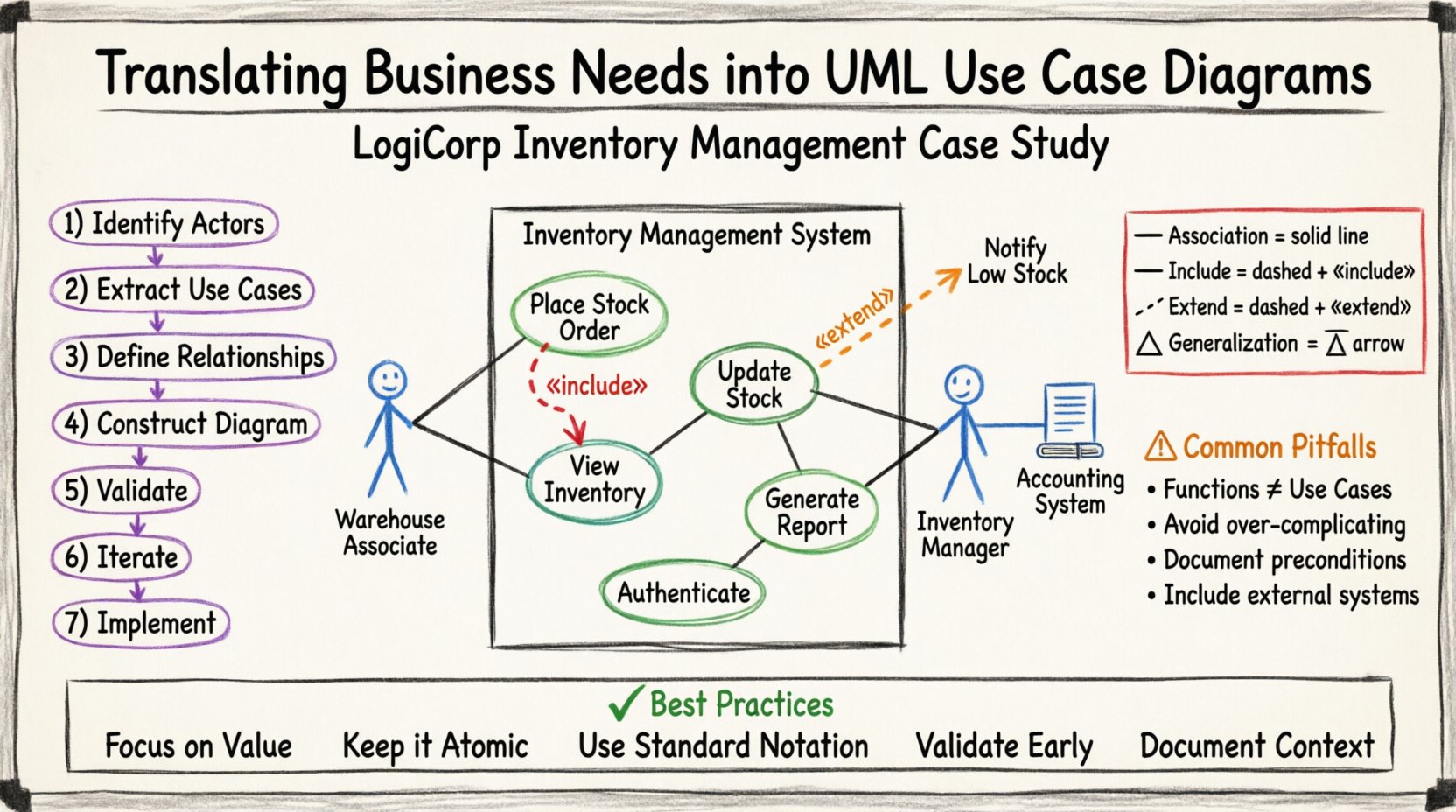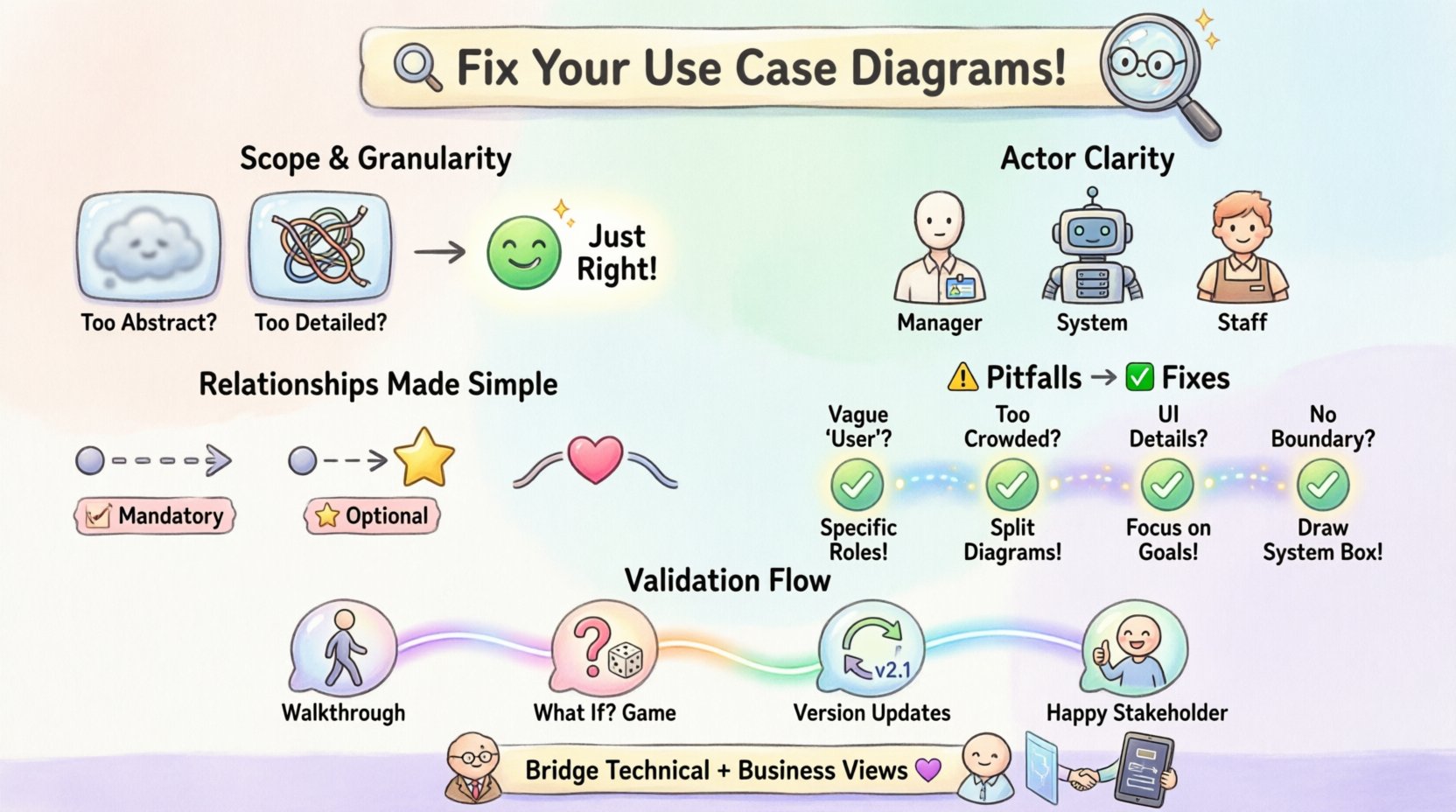
In the landscape of software development, the gap between business requirements and technical implementation often leads to costly rework. One of the most effective tools to bridge this divide is the UML Use Case Diagram. It serves as a visual …
Understanding the dynamic behavior of a system is critical when designing complex software architectures. While class diagrams define structure and sequence diagrams define interaction flow, the UML State Diagram (or State Machine Diagram) focuses on the lifecycle of a single …
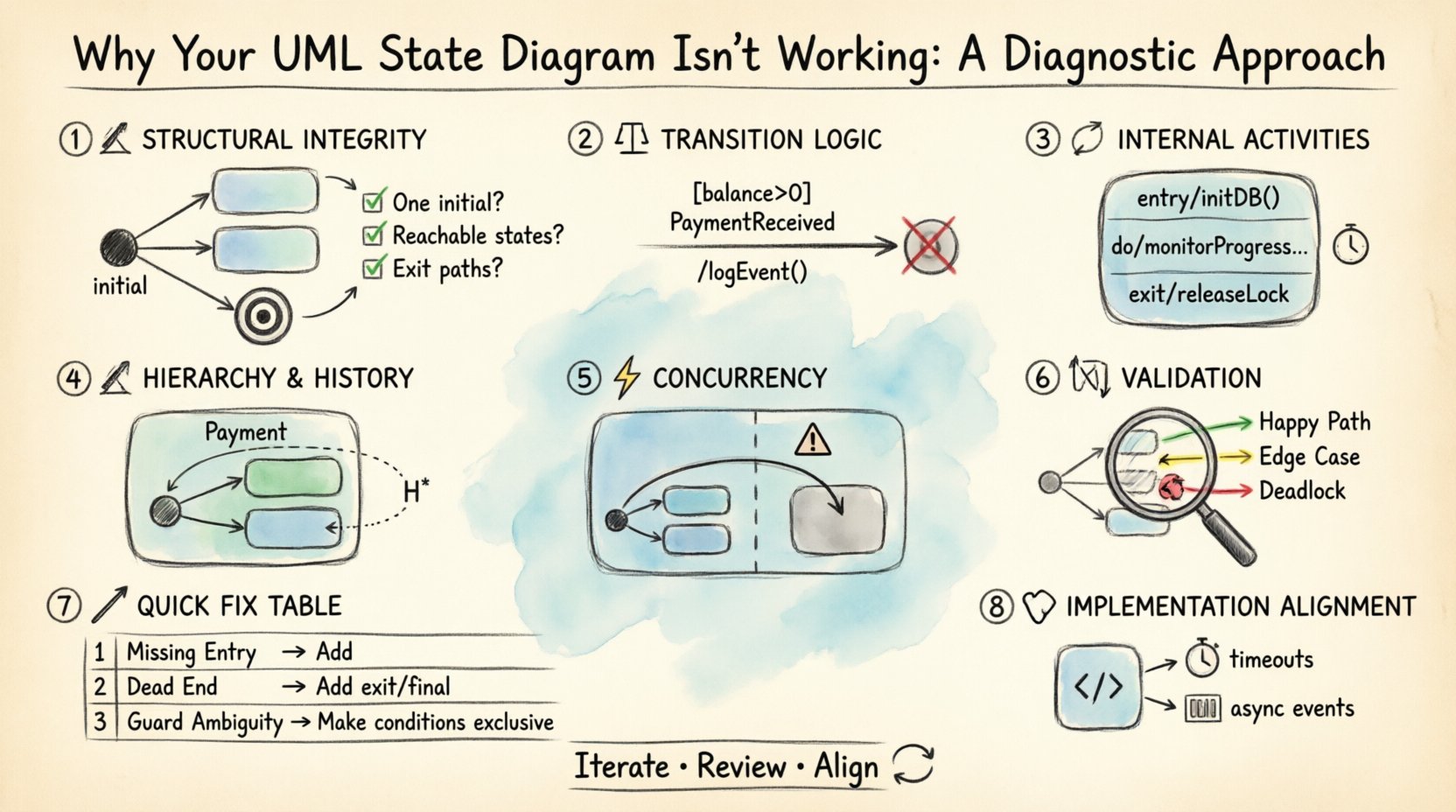
Modeling system behavior requires precision. When you construct a UML State Machine Diagram, the expectation is a clear map of how a system responds to events over time. However, many practitioners encounter diagrams that fail to translate into working logic …
Software development projects often fail not because of bad code, but because of bad requirements. The bridge between a vague idea and a functional system is built using modeling techniques. Among these, the UML Use Case Diagram is a cornerstone …
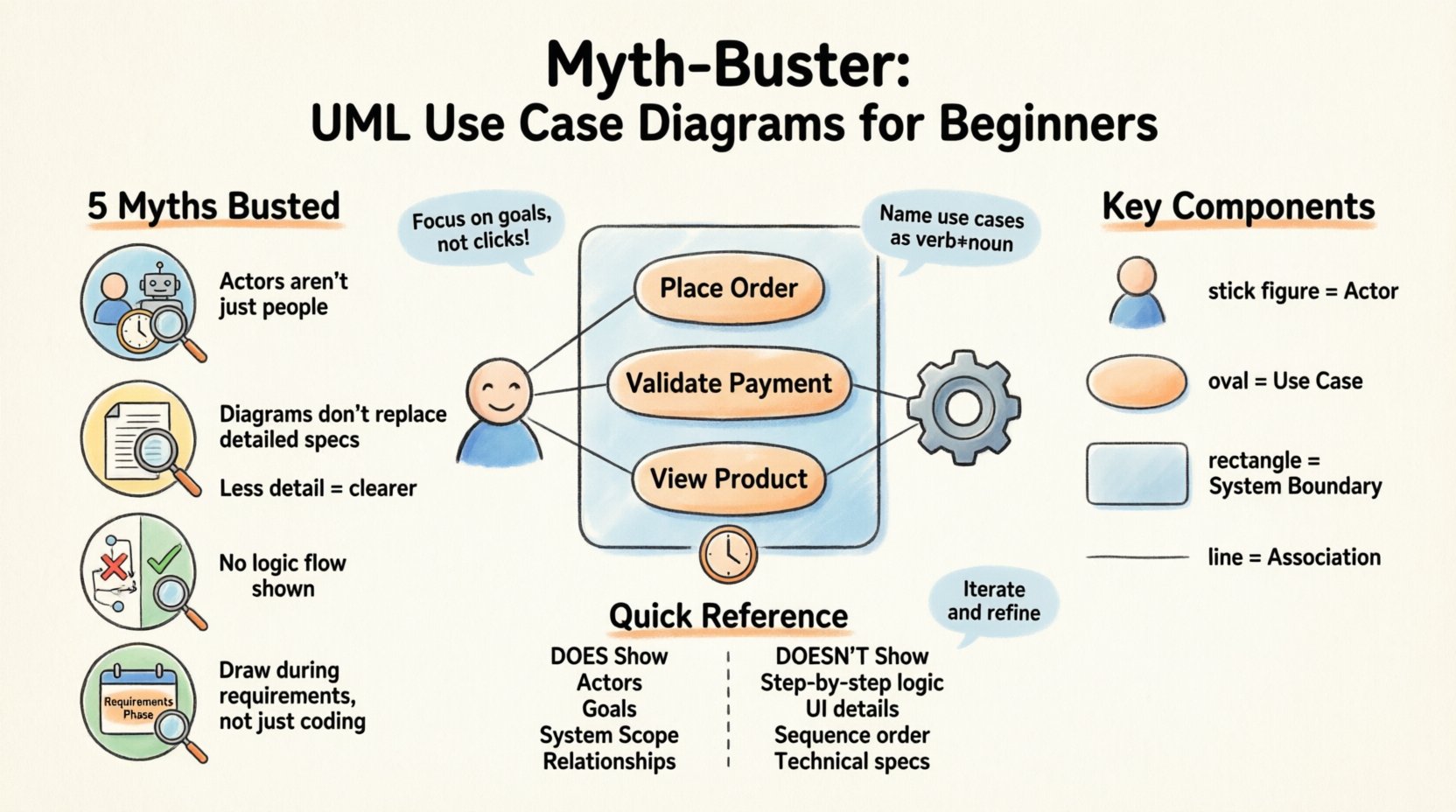
When starting out with software architecture, few concepts generate as much confusion as the Unified Modeling Language (UML). Among the many diagram types available, the Use Case Diagram often stands out as both the most intuitive and the most misunderstood. …
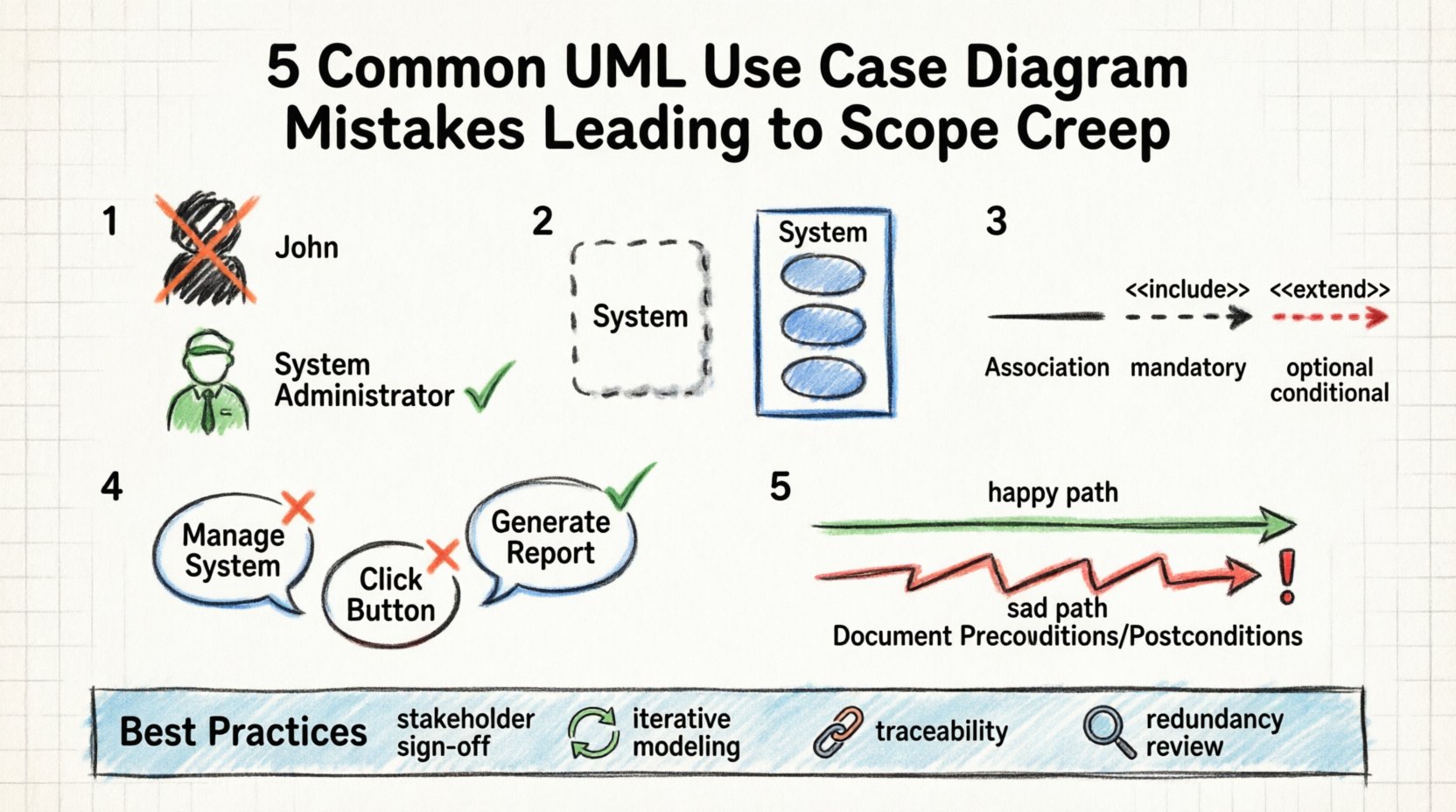
Creating a Use Case Diagram is often viewed as a technical checkpoint in the systems engineering lifecycle. However, when a diagram lands on a stakeholder’s desk and is met with silence or confusion, the issue is rarely about the syntax. …
Designing complex systems requires more than just mapping out linear paths. Modern applications, embedded systems, and network protocols operate in environments where events arrive unpredictably. This is the domain of asynchronous behavior. To model this complexity effectively, engineers rely …
State Machine Diagrams are fundamental tools for modeling the dynamic behavior of software systems. They describe how a system reacts to events over time. While simple state diagrams work well for linear flows, real-world systems often require depth. This is …
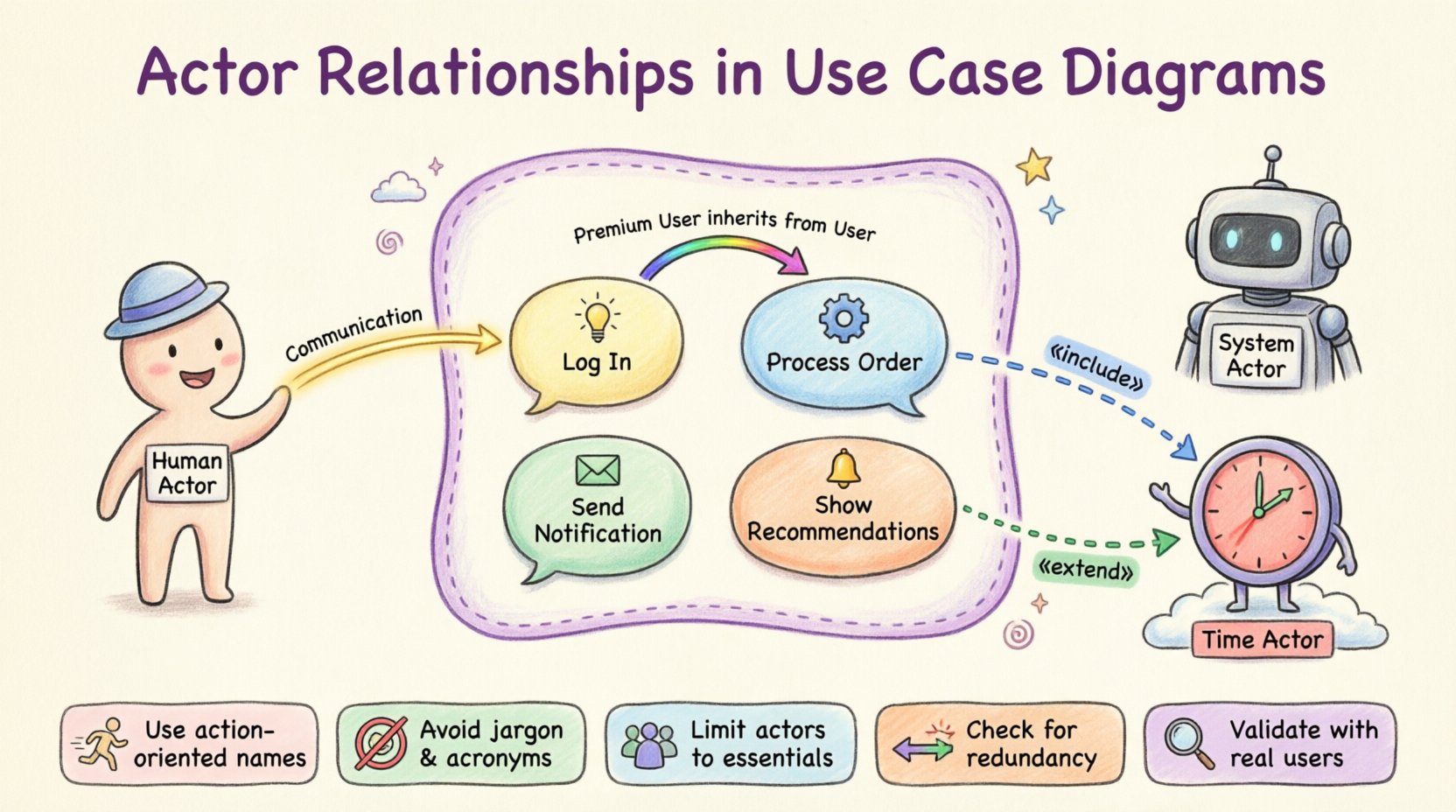
Modeling complex systems requires a clear understanding of how entities interact with the software they are building. At the heart of this modeling lies the Use Case Diagram, a fundamental tool in requirements engineering. Among the various elements in a …
Understanding the dynamic behavior of a system is often more complex than mapping its static structure. While class diagrams show what a system contains, state diagrams explain how it behaves over time. This guide focuses on the UML State Machine …