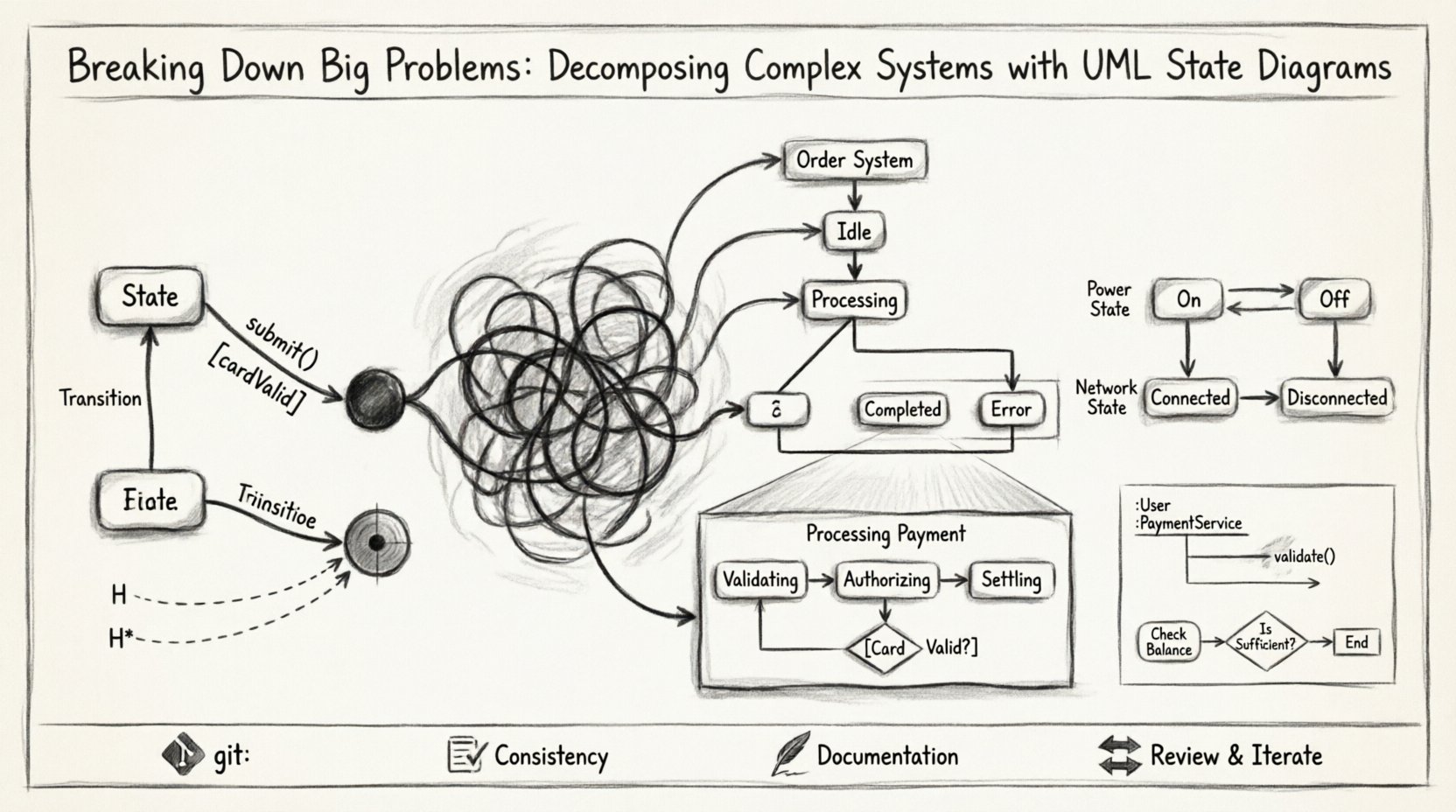
Complexity is the silent killer of system integrity. When a system grows beyond a certain threshold, linear thinking fails. Developers and architects often find themselves lost in a web of interdependent logic, where a change in one module triggers an …
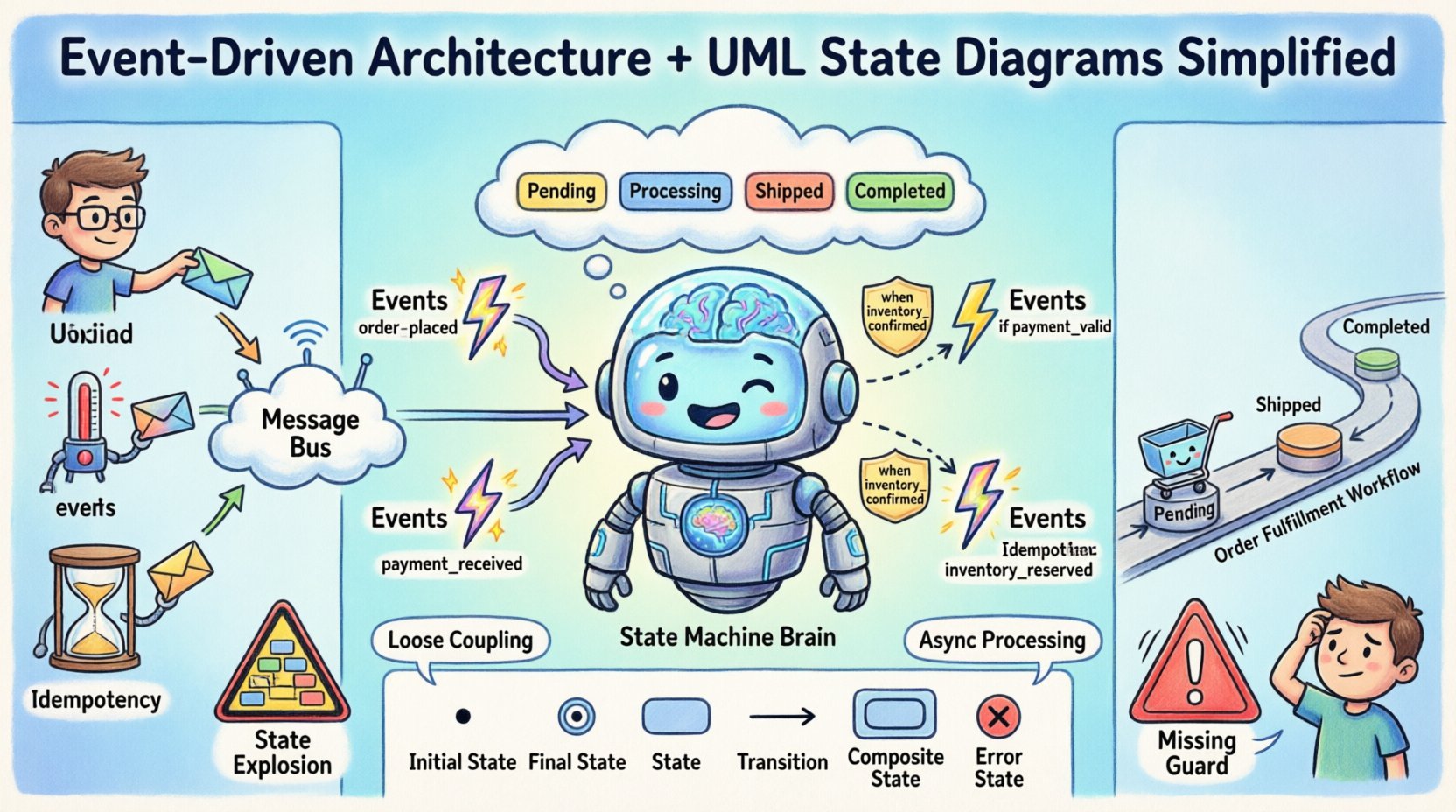
Modern software systems operate in dynamic environments where inputs arrive unpredictably. To manage this complexity, architects rely on patterns that decouple components and allow systems to react to changes rather than pushing data continuously. This approach is known as Event-Driven …
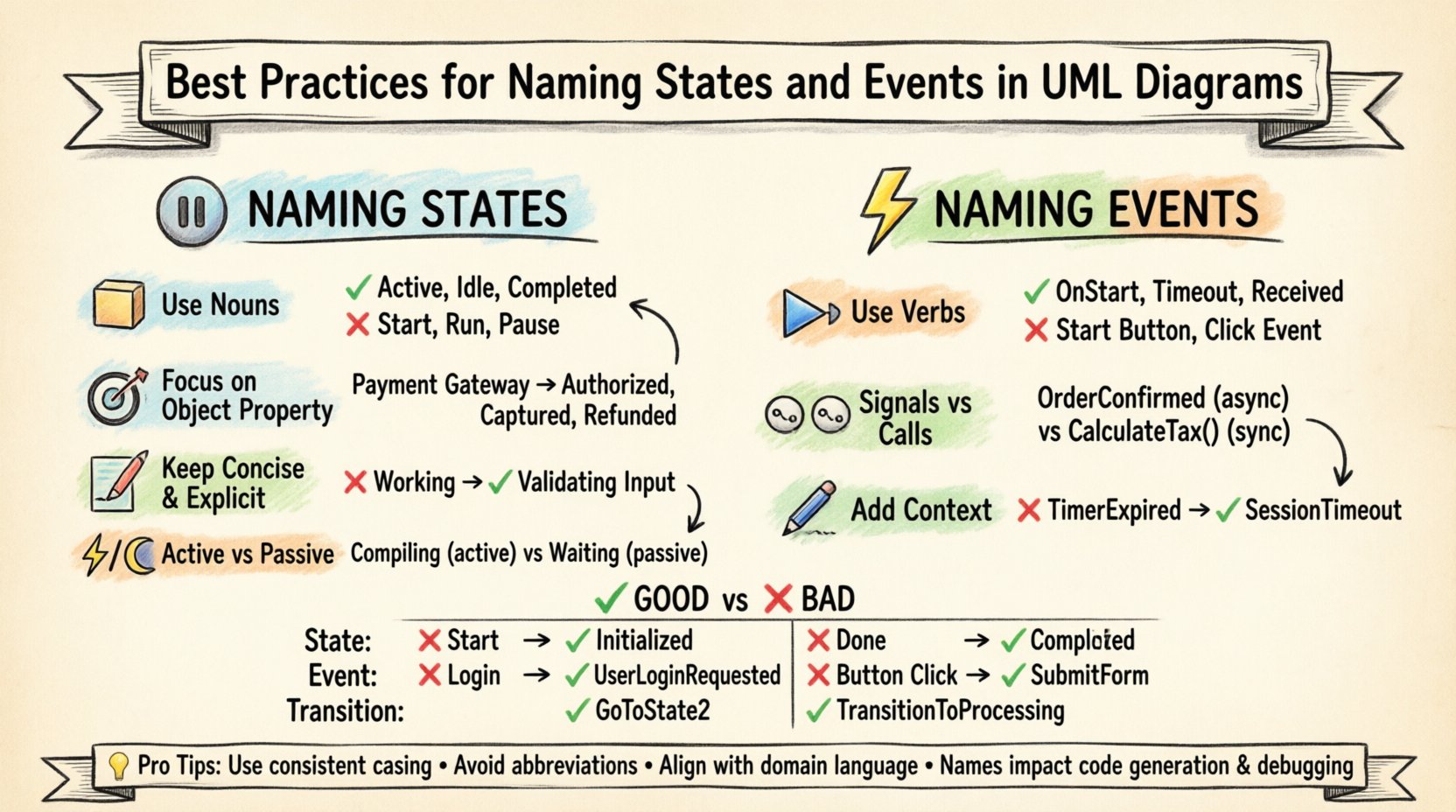
Designing a system requires more than just defining logic; it demands clear communication. When creating a UML State Machine Diagram, the labels you choose are not merely decorative. They serve as the primary interface between the designer’s intent and the …
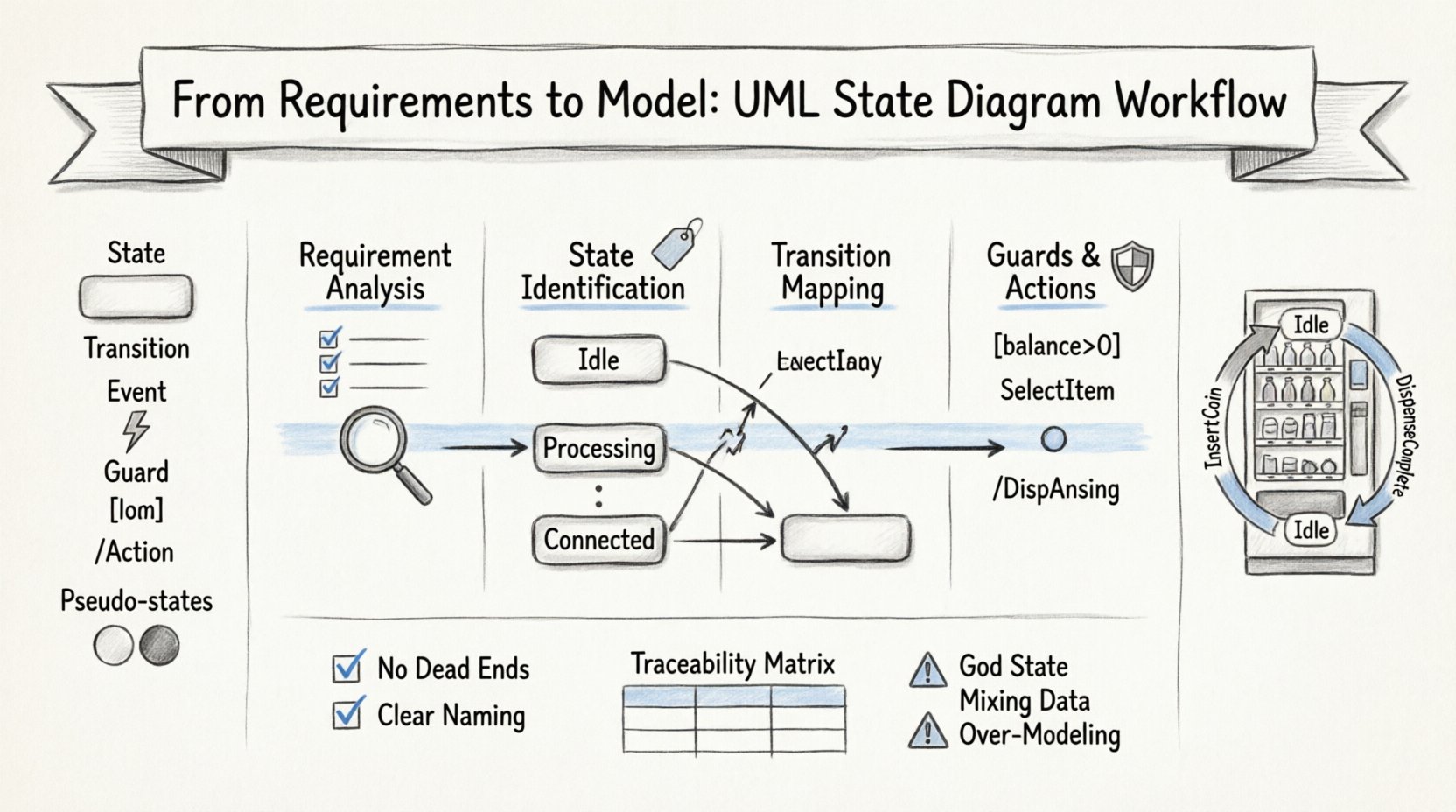
System behavior is rarely linear. Software and hardware systems react to inputs, maintain internal conditions, and transition between different modes of operation. Capturing this dynamic behavior is crucial for robust engineering. The Unified Modeling Language (UML) State Machine Diagram, often …
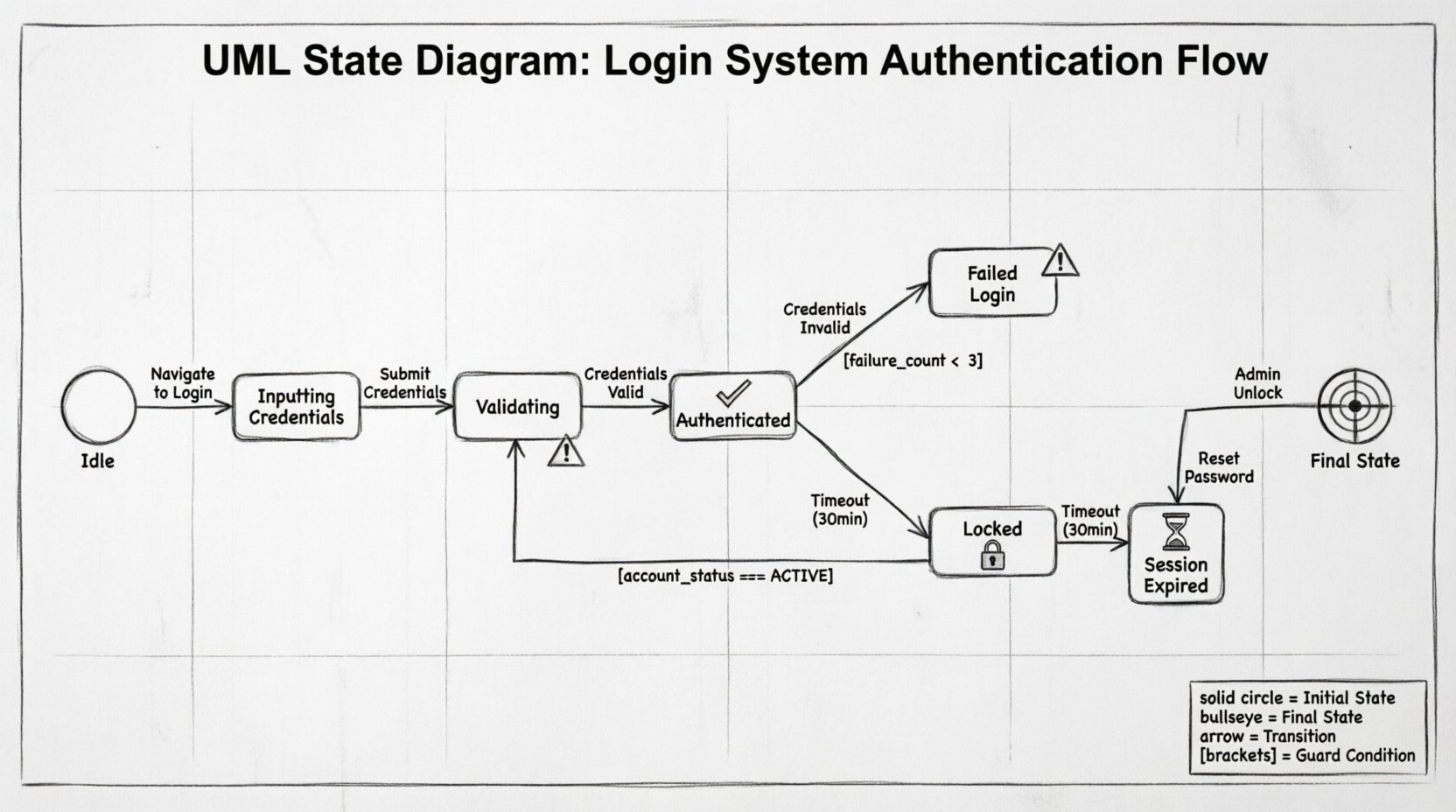
Designing a secure and reliable authentication system requires more than just checking a username and password against a database. It demands a structured understanding of how a system behaves over time. This is where the UML State Diagram, also known …
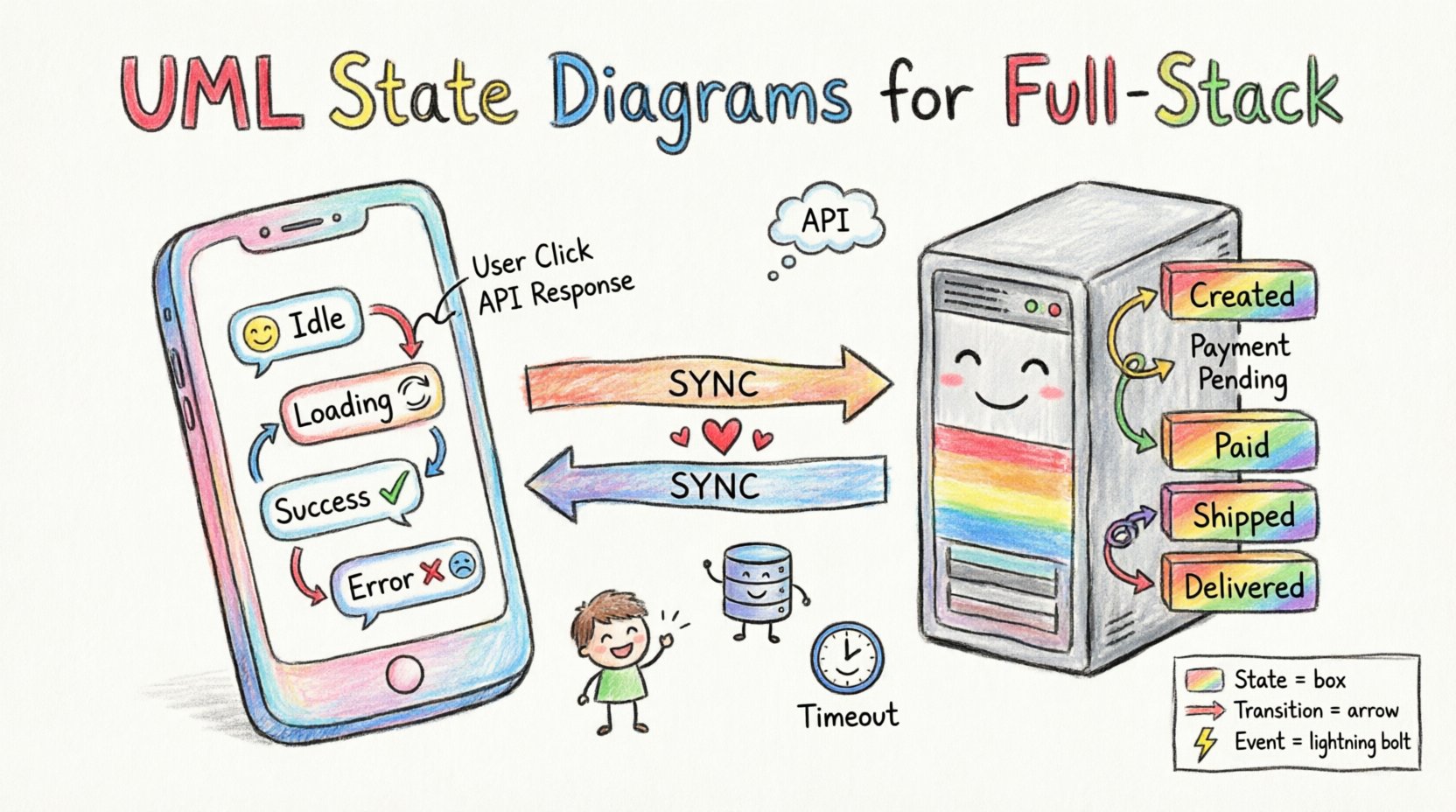
Building robust applications requires more than just writing functional code. It demands a clear mental model of how data and user interactions evolve over time. In complex systems, logic often branches into multiple paths based on user input, server responses, …
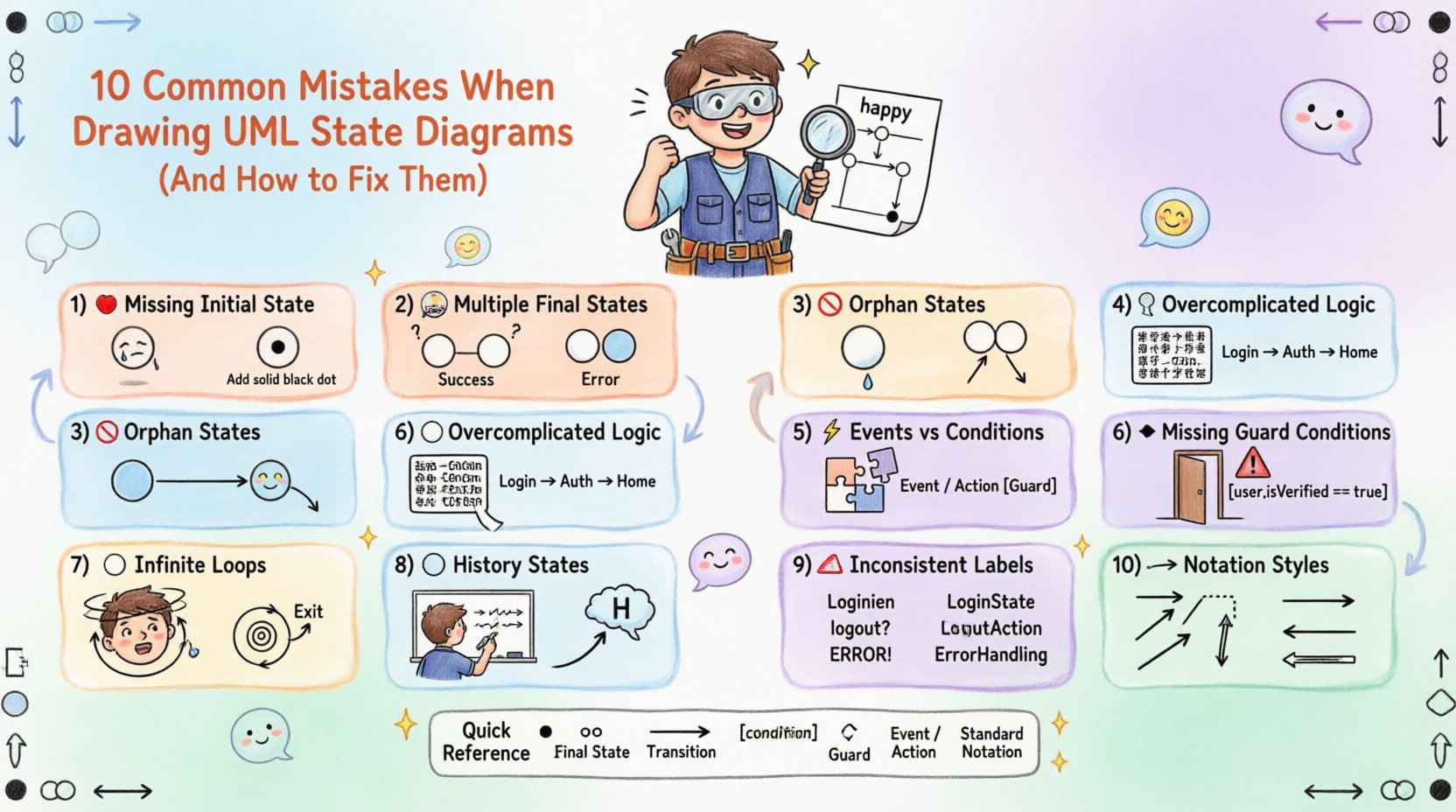
UML State Machine Diagrams, often referred to as State Diagrams, are critical tools for modeling the dynamic behavior of systems. They define how an object responds to events over time. However, creating an accurate model requires precision. Many engineers and …
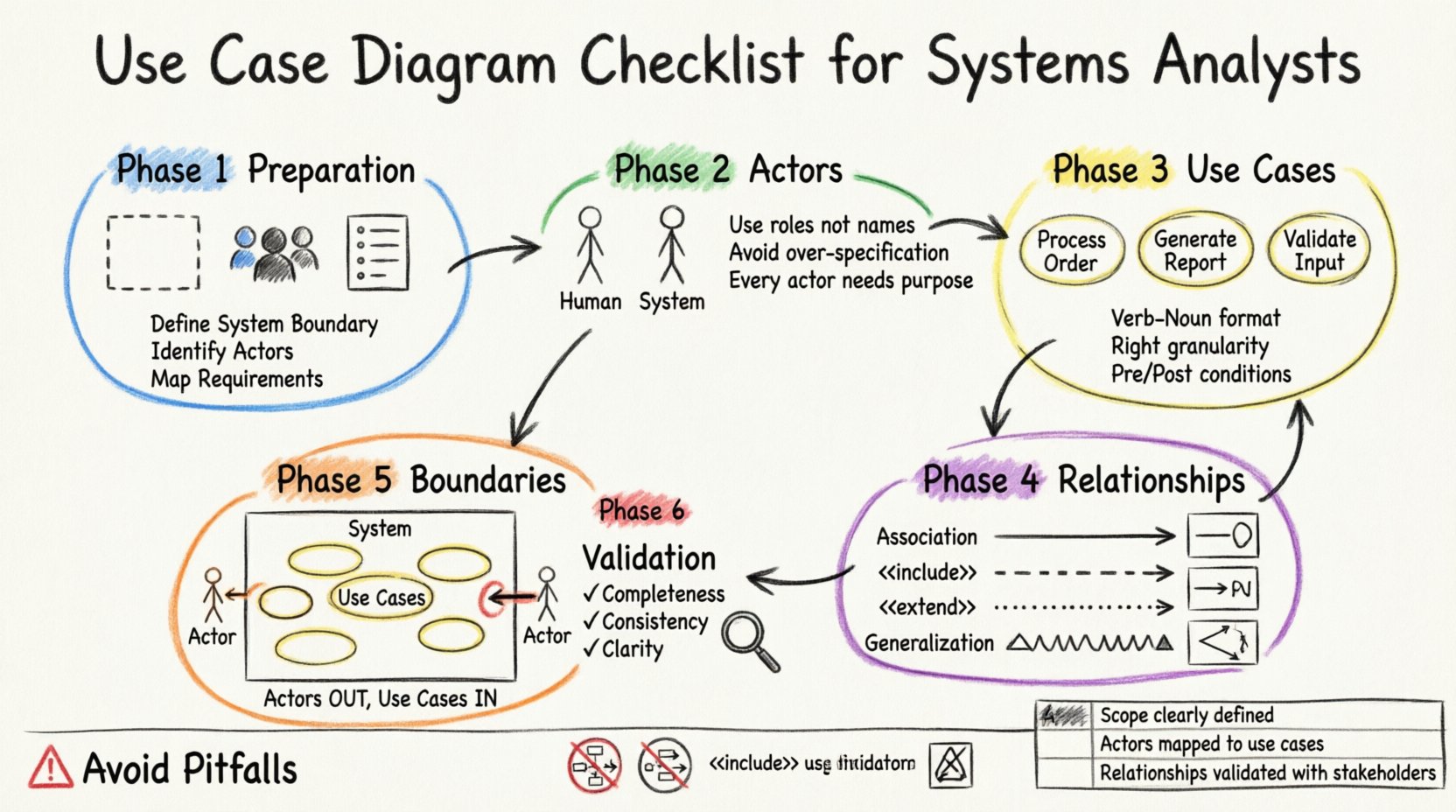
Systems analysis serves as the bridge between business requirements and technical implementation. At the heart of this translation process lies the Unified Modeling Language (UML), and specifically, the Use Case Diagram. This visual representation defines the interactions between users (actors) …
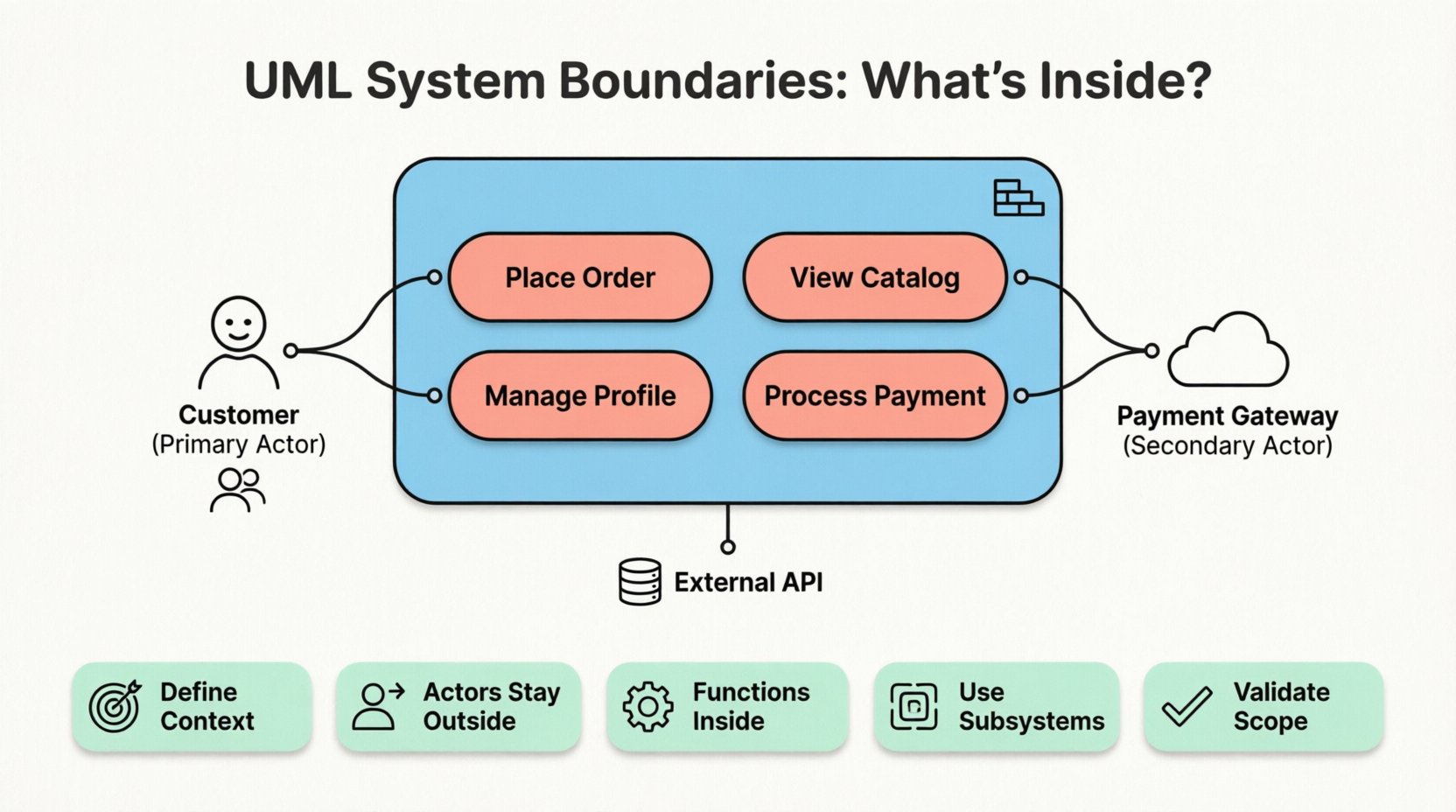
Creating a robust software architecture begins long before the first line of code is written. It starts with clarity. Specifically, it starts with defining the scope of the system you are building. In the world of Unified Modeling Language (UML), …
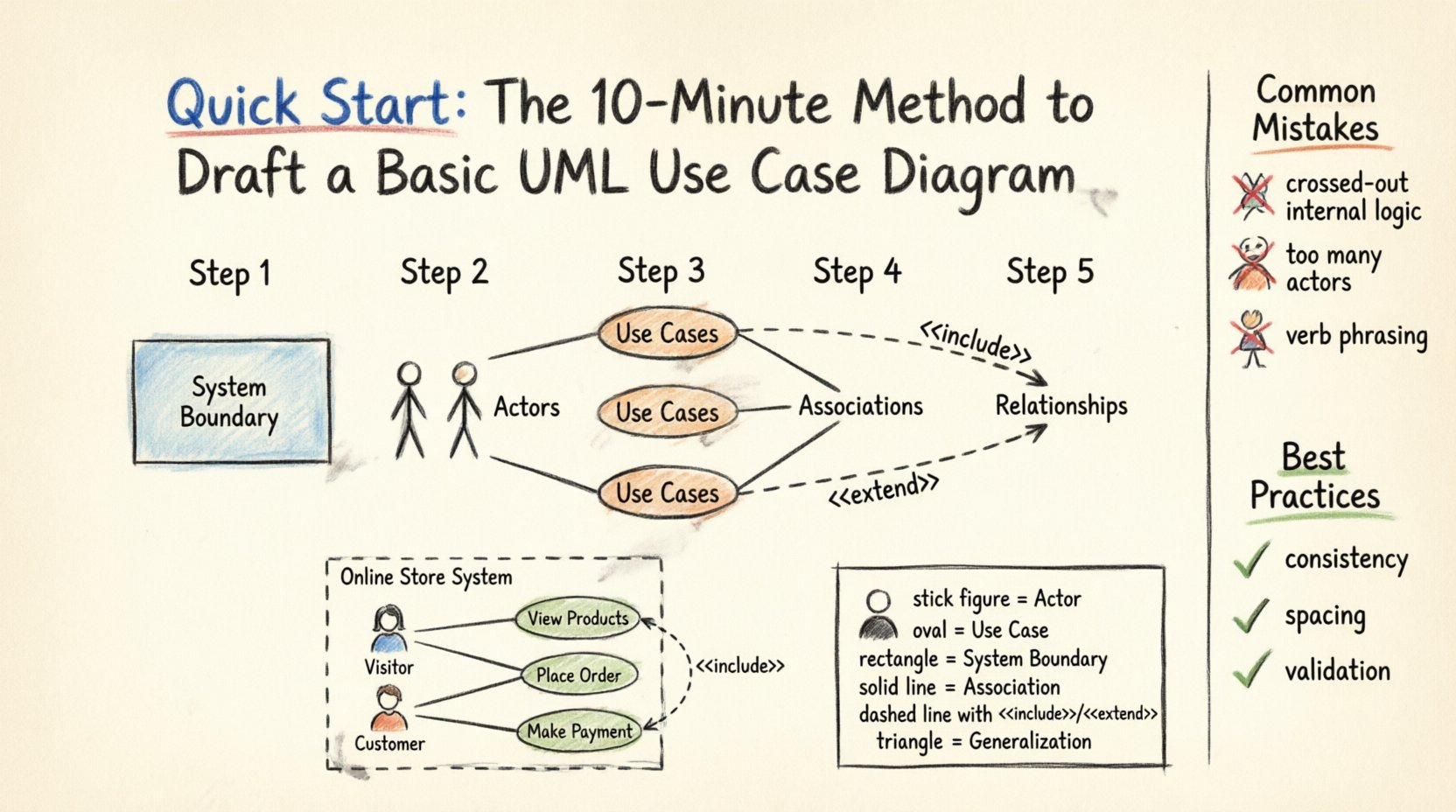
Creating a clear visual representation of system functionality is essential for software development. A UML Use Case Diagram provides a high-level view of how users interact with a system. This guide outlines a streamlined approach to drafting these diagrams without …